SAFE notes explained: how they work, plus India’s CCPS and iSAFE
How YC's post-money SAFE converts, with worked numbers, why Indian startups use CCPS or iSAFE instead, and the RBI rules for startup convertible notes.
 Ishaan Vardhan26 Oct 2026 · 12 min read
A SAFE (simple agreement for future equity) lets an investor give a startup money now in return for shares later, usually at the next priced funding round, without setting a valuation today. It is not a loan: there is no interest and no maturity date. Indian companies cannot use the US document as it stands, so they get the same economics through compulsorily convertible preference shares (CCPS), most famously packaged as the “iSAFE”.
Y Combinator (YC), which created the SAFE, still publishes it free, and its user guide says the SAFE has largely succeeded in replacing convertible notes for early-stage fundraising. Indian law firms were still explaining why the US form does not fit Indian company law as recently as August 2026. This guide covers how a post-money SAFE converts, with worked numbers, then the Indian equivalents and their rules.
Key takeaways
- YC introduced the SAFE in late 2013 and switched to the “post-money” SAFE in 2018, so ownership sold is simply the investment divided by the valuation cap.
- A SAFE converts automatically in a priced round; in a sale or shutdown, the holder gets its money back or its as-converted share, ranking below creditors.
- Stacking several post-money SAFEs dilutes founders, not earlier SAFE holders.
- In India, iSAFE (launched by 100X.VC in July 2019) is legally a CCPS issue, so share-allotment, valuation and FEMA rules apply.
- DPIIT-recognised startups also have a statutory convertible note: at least ₹25 lakh in one tranche, converted or repaid within 10 years.
What a SAFE is
A SAFE is a short contract under which an investor pays now and receives shares when the company later raises a priced round. YC’s documents page says it was created in 2013 under YC partner Carolynn Levy, is not debt, carries no interest or maturity date, converts automatically rather than at the investor’s option, and has no minimum round size to trigger conversion, according to YC. YC also notes that investors should be accredited, the US category for investors who meet income or wealth tests.
YC’s user guide explains the original purpose: when the SAFE arrived in late 2013, startups mostly raised early money on convertible notes, which are loans that convert into equity, and the SAFE was designed to replace them, according to YC’s Post-Money Safe User Guide. Because there is no maturity date, founders never have to negotiate extensions or interest, and usually the only term to agree is the valuation cap. Each investor can sign and wire money when ready, rather than everyone closing on one date.
Pillar Legal, a US law firm, contrasts this with the alternatives: standard venture financing forms from the National Venture Capital Association run to over 200 pages and Series Seed forms to nearly 38, while the SAFE has about five pages of substantive terms, according to Pillar Legal (November 2023).
The four versions
YC publishes a standard post-money SAFE with a valuation cap only, plus versions with a discount only, an uncapped “MFN” (most favoured nation) version that gives the investor the best terms later given to other SAFE holders, and a cap-plus-discount version described in the user guide. An optional pro rata side letter gives investors the right to buy into the next round. YC also offers versions for Canada, the Cayman Islands and Singapore, according to YC.

How a post-money SAFE converts
In 2018 YC changed the cap from a pre-money to a post-money basis. The post-money cap counts all the SAFE money and the existing option pool, but not the new money or the option pool increase in the priced round, according to the YC user guide. YC’s stated reason: under the original SAFE, founders could not easily calculate how much of the company they had sold, because the answer depended on other SAFEs and on an option pool negotiated years later. With the post-money version, ownership sold is the amount invested divided by the post-money cap.
YC’s own quick-start example: a founder who wants to raise $1 million and sell 15% sets a post-money cap of about $6.7 million ($1 million ÷ 15%). Raising $500,000 sells about 7.5%; raising $800,000 sells about 12%.
Worked example: cap, then a Series A
The following figures are illustrative and the arithmetic is ours, not taken from YC.
- A startup raises $500,000 on a SAFE with a $5 million post-money cap. The SAFE holder will own 0.5 ÷ 5 = 10% of the company immediately after the SAFEs convert.
- A year later, new investors put $4 million into a Series A at a $16 million pre-money valuation, a $20 million post-money valuation, so they own 4 ÷ 20 = 20%.
- The SAFE converts in that round. Because the SAFE is diluted by Series A money, its 10% becomes 10% × (100% − 20%) = 8% after the Series A, before any option pool increase.
That last point surprises some founders and investors: post-money SAFE ownership is calculated “post-SAFEs”, not post-Series A. YC’s guide makes the same point in its own worked example, in which 15% sold on SAFEs falls to about 9.09% after a Series A that takes roughly 39% including a new option pool.
Worked example: discount
With a discount SAFE, the investor converts at a reduced price per share. YC’s guide gives the mechanics: a 20% discount means a “discount rate” of 80% of the Series A price. In our illustration, if Series A shares are priced at $2.00, a 20%-discount SAFE converts at $1.60, so $500,000 buys 312,500 shares, against 250,000 shares for a Series A investor putting in the same amount. Where a SAFE has both a cap and a discount, the investor gets whichever gives the better price.
What happens if the company is sold or shuts down
If the company is acquired or goes public before a priced round, the SAFE holder receives the greater of its original investment or what it would get if the SAFE had converted at the cap, according to YC’s guide. If the company shuts down, the holder is entitled to its money back. In both cases the SAFE ranks below creditors and other debt, including convertible notes, and alongside standard non-participating preferred stock.
The founder’s main risk: stacking SAFEs
Pillar Legal argues that the post-money design gives SAFE holders a form of anti-dilution protection: later SAFEs and other convertibles issued before the priced round do not dilute earlier SAFE holders, so founders absorb that dilution. The firm adds that many founders sign SAFEs without a lawyer and may not see this.
A simple illustration, our arithmetic: a founder raises $500,000 at a $5 million post-money cap (10%), then $1 million at a $10 million cap (10%), then $1.5 million at a $15 million cap (10%). Each round sounds modest, but together the founders have sold 30% before the Series A takes its share. YC’s quick-start guide shows the same addition across multiple caps, which is why it urges keeping an accurate cap table.

Why a US SAFE does not work in India
LegaLogic lawyers Minal Raut and Anmol Deshmukh set out the problems in an article on Mondaq on 14 August 2026, according to Mondaq:
- A contractual SAFE does not fit any category of security recognised under the Companies Act, 2013.
- Section 42 of the Act requires shares to be allotted within 60 days of receiving money in a private placement; a SAFE defers issuance indefinitely.
- Money received without allotting a recognised security risks being treated as a deposit under section 73, which can trigger refund obligations.
- For foreign investors, a contractual SAFE does not fit the instruments permitted under FEMA (the Foreign Exchange Management Act).
The fix Indian practice settled on is to issue an existing instrument that behaves like a SAFE.
India’s equivalents: CCPS and iSAFE
Compulsorily convertible preference shares
CCPS are preference shares that must convert into equity shares. Under the Reserve Bank of India’s foreign investment rules, only fully and mandatorily convertible, fully paid preference shares count as equity instruments; optionally convertible or non-convertible ones are treated as debt, according to the RBI’s Master Direction on Foreign Investment (updated to 15 June 2026). For foreign investors, the price or conversion formula must be fixed upfront when the shares are issued, and the conversion price cannot be lower than the fair value at the time of issue. The company must report the issue to the RBI in Form FC-GPR within 30 days.
Treelife, an Indian advisory firm, describes CCPS-based SAFEs in a June 2026 guide: the company issues preference shares immediately, with conversion triggered by a priced round, a sale or a long-stop date, and preference shares in unlisted companies can run for up to 20 years under section 55, according to Treelife. It lists the usual paperwork: board and shareholder approvals, a private placement offer in Form PAS-4, a return of allotment in Form PAS-3, and a valuation report from a registered valuer, plus FEMA valuation norms for foreign investors. It also notes that if preference dividends go unpaid for two consecutive years, preference shareholders gain voting rights on all resolutions under section 47(2).

iSAFE
The India SAFE note, or iSAFE, was introduced by the early-stage fund 100X.VC in July 2019. It is legally structured as CCPS and converts on the next priced round, dissolution, merger or acquisition, or at the end of three years from issue, whichever comes first, according to 100X.VC. The firm says this removes the need to set a pre-money or post-money valuation at idea, prototype or very early revenue stage, and publishes template variants with a cap, a discount, both, or MFN terms.
An analysis of the iSAFE template by TrailBlazer Advocates in November 2021 noted a nominal non-cumulative dividend of 0.0001% and a liquidation preference that ranks the holder above equity shareholders, according to TrailBlazer. The Mondaq authors sum it up as a preference share subscription agreement engineered to copy SAFE terms rather than a SAFE as such. Key practical differences from the US form: it appears in shareholders’ funds, it requires a valuation report and filings at the time of issue, and LLPs cannot use it because they cannot issue preference shares.
Illustration in rupees
Again, our own arithmetic: an angel puts ₹50 lakh into an iSAFE-style CCPS with a ₹10 crore valuation cap on a post-money basis. If the startup later raises a priced round well above that valuation, the CCPS converts as if at the cap, giving about 5% (0.5 ÷ 10) before the new round’s dilution. Under FEMA, if the investor were non-resident, that conversion price could not fall below the fair value set at issue.
The other Indian option: startup convertible notes
India does have a statutory convertible note, but only for startups recognised by DPIIT (the Department for Promotion of Industry and Internal Trade). The RBI defines it as an instrument issued by a startup that is initially debt, repayable at the holder’s option or convertible into equity within 10 years. A foreign investor must put in ₹25 lakh or more in a single tranche, citizens and entities of Pakistan and Bangladesh are excluded, and sectors that need government approval for foreign investment need it here too, according to the RBI.
Tax risk has also eased. The so-called angel tax, which taxed share premiums above fair value, including on CCPS according to Treelife, was abolished for all classes of investors in the July 2024 Budget, according to the Budget speech. Valuation reports are still needed under company and FEMA rules.

Which to use
| US post-money SAFE | India CCPS / iSAFE | India startup convertible note | |
|---|---|---|---|
| Legal form | Contract (not debt, not equity yet) | Preference shares, issued now | Debt until converted |
| Who can issue | US company (YC also has Canada, Cayman and Singapore versions) | Indian company | DPIIT-recognised startup |
| Deadline | None | iSAFE: 3 years; CCPS up to 20 years | Convert or repay within 10 years |
| Valuation report at issue | No | Yes | Check FEMA pricing rules |
| Minimum ticket | None set | None set | ₹25 lakh per tranche (foreign investors) |
If your company is a US entity, the YC SAFE is the default for early money. If it is an Indian private limited company, CCPS or an iSAFE gives similar economics within Indian law. Whichever you use, model the dilution before you sign. If you are tracking who is raising on these terms, our funding tracker lists recent rounds, and our startup news covers the companies behind them.
Bottom line
The SAFE’s appeal is speed and simplicity: one short document, one number to negotiate, no interest and no deadline. Its main trap is that dilution from several post-money SAFEs falls on founders. India gets most of the same economics through CCPS, but with share-allotment, valuation, FEMA and filing steps that a US SAFE avoids. This article is general information, not legal or tax advice; confirm the structure for your company with a qualified lawyer or chartered accountant.
FAQ
Is a SAFE debt or equity?
Neither until it converts. YC says it is not debt, has no interest or maturity, and converts into preferred stock in a priced round.
What is a post-money valuation cap?
A cap measured after all SAFE money is counted, so ownership sold equals the investment divided by the cap.
Can an Indian company issue a YC SAFE?
Not as it stands. Indian law firms say it does not fit recognised securities under the Companies Act and FEMA, so Indian startups use CCPS or iSAFE instead.
What is an iSAFE note?
A SAFE-style template from 100X.VC, legally issued as CCPS, that converts on a priced round, sale, dissolution or after three years.
Can foreign investors buy convertible notes in Indian startups?
Yes, from DPIIT-recognised startups, for at least ₹25 lakh per tranche, converted or repaid within 10 years, subject to RBI conditions.
Is angel tax still a problem for CCPS?
The Budget of July 2024 abolished the so-called angel tax for all classes of investors.
Sources
- Y Combinator, “SAFE financing documents“, accessed 6 October 2026
- Y Combinator, “Post-Money Safe User Guide and Quick Start Guide“, February 2023
- Pillar Legal, “Y Combinator’s Post-Money SAFE: Risks for Founders“, 7 November 2023
- Mondaq (LegaLogic), “Safe And iSafe: Why Startup India Needed A Different Kind Of ‘Simple’ Agreement“, 14 August 2026
- Reserve Bank of India, “Master Direction – Foreign Investment in India“, updated 15 June 2026
- Treelife, “CCPS SAFE notes in India: structure, investor rights, and compliance“, 11 June 2026
- 100X.VC, “iSAFE Notes“, accessed 6 October 2026
- TrailBlazer Advocates and Associates, “Decoding the iSAFE Document“, 13 November 2021
- Ministry of Finance (India Budget), “Budget 2024-2025: Speech of Nirmala Sitharaman“, 23 July 2024
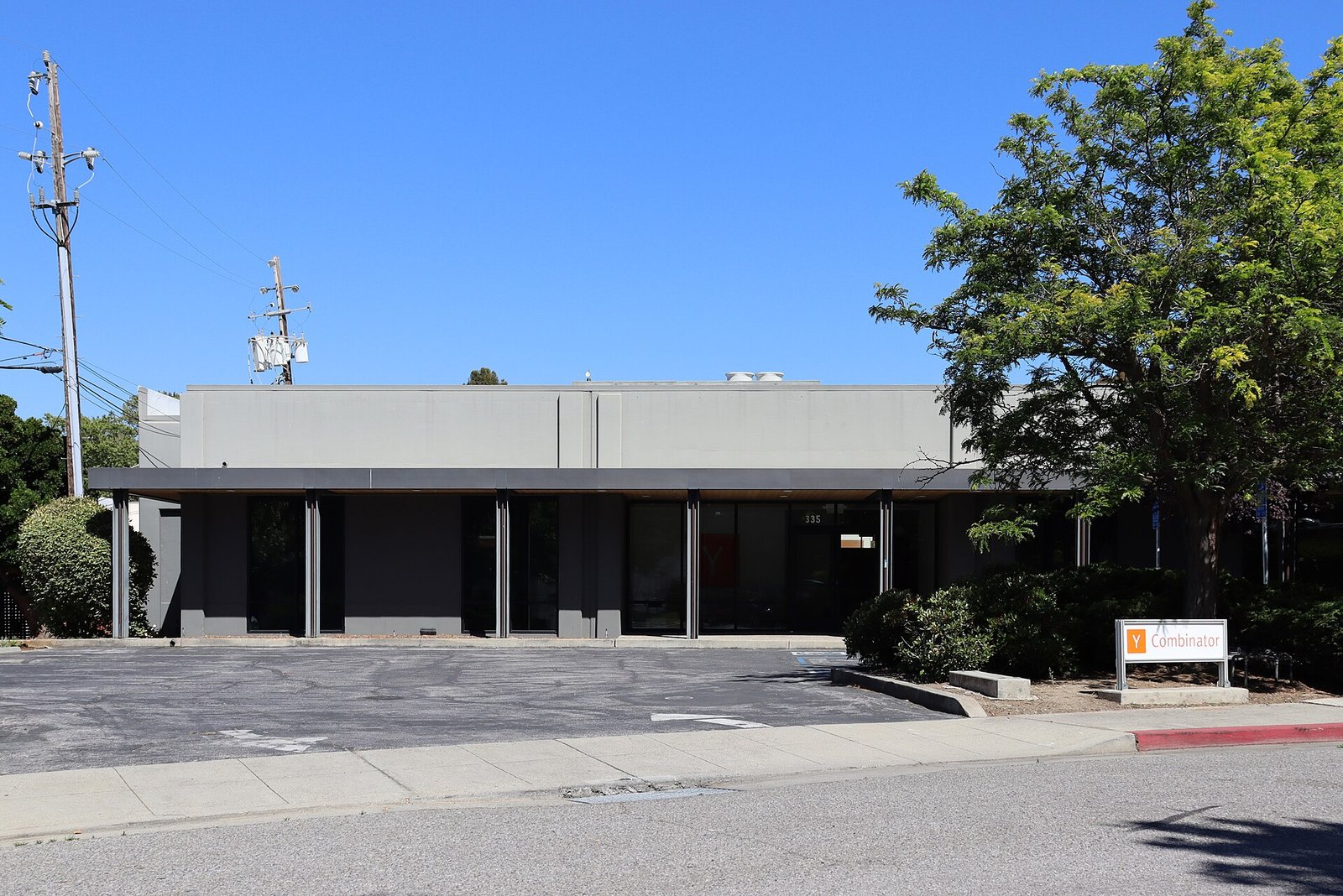
Featured image: 335 Pioneer Way in Mountain View, once Y Combinator's headquarters. YC introduced the SAFE in 2013. · Photo: Coolcaesar / Wikimedia Commons, CC BY 4.0
How this article was made: researched and drafted with AI assistance by the 100xFounder editorial desk, using only the sources listed in it; every figure links to its source. Read our editorial policy, or report an error through our corrections policy.
Related stories

Sources (9)
- Y Combinator 6 Oct 2026SAFE created 2013 under Carolynn Levy; post-money 2018; versions; not debt, no interest/maturity; automatic conversion; accredited investors; non-US versions
- Y Combinator 1 Feb 2023Late-2013 origin replacing convertible notes; post-money mechanics; $1M/15%/$6.7M example; 15% to 9.09% example; liquidity and dissolution treatment; discount rate; cap table advice
- Pillar Legal 7 Nov 2023Post-money SAFE anti-dilution vs founders; NVCA 200+ pages, Series Seed ~38, SAFE ~5 pages
- Mondaq (LegaLogic) 14 Aug 2026SAFE doesn't fit Companies Act; s.42 60-day allotment; s.73 deposit risk; FEMA gap; iSAFE is CCPS; LLPs can't issue
- Reserve Bank of India 15 Jun 2026Equity instruments incl. fully and mandatorily convertible preference shares; pricing formula upfront, conversion not below fair value at issue; FC-GPR 30 days; convertible note definition, ₹25 lakh, 10 years, Pakistan/Bangladesh exclusion, approval sectors
- Treelife 11 Jun 2026CCPS SAFE structure; 20-year s.55 limit; PAS-4, PAS-3, valuation report; s.47(2) voting; angel tax abolition and CCPS
- 100X.VC 6 Oct 2026iSAFE launched July 2019; CCPS form; conversion triggers incl. 3 years; template variants
- TrailBlazer Advocates and Associates 13 Nov 20210.0001% non-cumulative dividend; liquidation preference above equity
- Ministry of Finance 23 Jul 2024Angel tax abolished for all classes of investors