H-1B in 2026: $100,000 fee status, weighted lottery and new rules
The $100,000 H-1B fee was extended to 2027 but a court order blocks it. Here is the wage-weighted lottery, the proposed $103,265 fee and what to do now.
 Ishaan Vardhan22 Oct 2026 · 11 min read
The $100,000 H-1B payment is still on the books but is not being collected. On 18 September 2026 the White House extended it to 21 September 2027, yet a federal court order that vacated the agency guidance behind it remains in force, and USCIS says it will comply with that order. Meanwhile the lottery has become a wage-weighted draw, and DHS has proposed a separate $103,265 fee on every cap-subject petition, so the rules for 2027 are still moving.
This is general information, not immigration advice. Rules change quickly, so confirm anything here on uscis.gov or with a qualified US immigration attorney before you act.
Key takeaways
- Proclamation 11069, signed on 18 September 2026, extends the $100,000 H-1B entry payment until 21 September 2027, according to the Federal Register.
- A Massachusetts federal court vacated USCIS’s guidance implementing the payment on 8 June 2026, and the First Circuit refused to pause that order on 24 July 2026, according to USCIS. For now the payment is not being enforced.
- The FY 2027 lottery was the first to use wage-weighted selection: a Level IV offer gets four entries, a Level I offer gets one.
- DHS has proposed a separate $103,265 fee for all cap-subject H-1B petitions. Comments closed on 24 September 2026, and it is not yet a final rule.
- Separate proposals and a new executive order look at the 60-day grace period after a job loss and at employer layoffs. Workers should plan for less room for error.
What the September 2026 proclamation actually says
The original order, Proclamation 10973 of 19 September 2025, restricted the entry of H-1B workers unless their petitions were “accompanied or supplemented by a payment of $100,000.” The payment took effect at 12:01 a.m. Eastern on 21 September 2025. The new Proclamation 11069 keeps the same restriction for another 12 months, to 12:00 a.m. on 21 September 2027, according to the White House text.
The scope matters more than the headline number. Section 3 says the restriction applies to people who must seek admission to the US to put an approved petition into effect, “including through consular notification, notification at a port of entry, pre-flight inspection, or pre-clearance.” USCIS’s own H-1B page describes the payment as applying to beneficiaries who are outside the United States and do not hold a valid H-1B visa. In practice, the people most exposed are new hires abroad, such as an engineer recruited directly from Bengaluru, rather than F-1 students changing status inside the US. The proclamation also lets the Homeland Security Secretary grant national-interest exceptions for an individual, a company or a whole industry.
The proclamation gives its own scorecard. It says the payment has been made for “over 700 petitions” since September 2025. It also says the largest IT staffing and outsourcing firms cut their combined registrations from 24,946 to 2,055, a 92% drop, and that consular processing requests fell by nearly 97% between the FY 2025 and FY 2027 cap seasons. Those figures are the administration’s, published in the Federal Register on 23 September 2026.
Is the $100,000 fee being collected right now?
No. On 8 June 2026 the US District Court for the District of Massachusetts vacated the agency guidance implementing the payment in State of California v. Mullin, No. 1:25-cv-13829, according to USCIS. The government asked the First Circuit to stay that order while it appealed, and the First Circuit refused on 24 July 2026. USCIS says DHS “strongly disagrees” with the ruling “but will comply with the court’s order while DHS considers next steps.” Its H-1B page, last updated on 21 September 2026, still carries that court-order notice.
A second case points the other way. On 23 December 2025 a federal judge in Washington, DC upheld the payment in Chamber of Commerce v. DHS, finding it within the president’s power under section 212(f) of the Immigration and Nationality Act, according to Fragomen. The Chamber and the Association of American Universities appealed, and the DC Circuit had not ruled as of late September 2026, according to Borderless Counsel.
Yale’s Office of International Students and Scholars wrote on 23 September 2026 that the extension is, in effect, blocked for now because the Massachusetts order still stands. The practical reading is that the fee is suspended rather than abolished. If an appeals court reverses the vacatur, DHS has said it still plans to collect it.
The lottery is now weighted by wage level
DHS published its final rule, “Weighted Selection Process for Registrants and Petitioners Seeking To File Cap-Subject H-1B Petitions,” on 29 December 2025. It took effect on 27 February 2026, in time for the FY 2027 season, according to the Federal Register. Each unique beneficiary still goes into one pool, but the number of entries depends on the highest Department of Labor wage level the offered salary meets for that occupation and location.
| Offered wage meets | Entries in the draw |
|---|---|
| Level IV | 4 |
| Level III | 3 |
| Level II | 2 |
| Level I | 1 |
USCIS announced on 31 March 2026 that it had received enough registrations to reach both the 65,000 regular cap and the 20,000 US advanced-degree exemption for FY 2027. Petition filing opened on 1 April 2026 for at least 90 days. The registration fee was $215 per beneficiary, according to USCIS.
The administration says the mix has changed. In Proclamation 11069 it reports that registrants with at least a US master’s degree rose from 45.1% in FY 2026 to 66.1% in FY 2027. Offers at the two highest wage levels made up about 46.3% of selections, against 17.8% at the lowest level. Demand had already been falling: USCIS counts 758,994 eligible registrations for FY 2024, 470,342 for FY 2025 and 343,981 for FY 2026, with 120,141 selected in that last round.
The other rule changes in the pipeline
A proposed $103,265 fee on cap-subject petitions
On 25 August 2026 DHS proposed a new $103,265 fee, payable at filing, for all H-1B cap-subject petitions, including master’s-cap cases, according to the Federal Register. It rests on a different legal authority from the proclamation and would sit on top of any proclamation payment. Unlike the proclamation, it would apply whether or not the worker is abroad. The proposal would exempt cap-exempt employers such as universities and non-profit research bodies. Comments closed on 24 September 2026. Until DHS publishes a final rule, there is nothing to pay.
Higher prevailing wages
The Department of Labor proposed a rule titled “Improving Wage Protections for the Temporary and Permanent Employment of Certain Foreign Nationals in the United States” on 27 March 2026, according to Proclamation 11069. It would raise prevailing wage levels so they sit closer to what comparable US workers earn. Because the lottery now runs on those same wage levels, a final DOL rule would also change who gets extra entries.
Layoffs and the 60-day grace period
Executive Order 14431, signed alongside the proclamation on 18 September 2026, tells the State, Labor and Homeland Security departments to consider whether an H-1B sponsor made layoffs in the previous year, or plans any, that hurt similar US workers, according to the Federal Register. Separately, DHS proposed on 11 September 2026 to remove the discretionary grace period of up to 60 days that H-1B and some other workers get after losing a job. Comments are open until 10 November 2026.
What filing an H-1B costs in 2026, without the $100,000
These are the government fees on USCIS Form G-1055, edition 10/01/26. Most of them are paid by the employer, not the worker.
| Item | Amount (as of 1 Oct 2026) |
|---|---|
| Cap registration, per beneficiary | $215 |
| Form I-129 for H-1B | $780 paper / $730 online ($460 for small employers and non-profits) |
| Asylum Program Fee | $600 ($300 small employer, $0 non-profit) |
| Fraud Prevention and Detection fee (new and change-of-employer petitions) | $500 |
| Public Law 114-113 fee (employers with 50+ US staff, more than half on H-1B/L-1) | $4,000 |
| Premium processing (Form I-907) | $2,965 |
A DHS final rule published on 10 August 2026 also requires covered employers to pay the separate 9-11 Response and Biometric Entry-Exit Fee on all extension petitions, including those that do not involve a change of employer. That change applied from 9 September 2026, according to the Federal Register.
What tech workers should do now
If you are in the US on F-1, OPT or STEM OPT
A change of status inside the US was outside the proclamation’s payment as USCIS described it, and that is still the most dependable route. Under the weighted lottery, your offer’s wage level now matters: a role pitched at Level II rather than Level I doubles your entries. Ask your employer which occupation code and wage level it plans to register under before the next season. USCIS had not announced FY 2028 registration dates as of 4 October 2026.
If you are abroad, for example in India
Consular cases are where the $100,000 payment bit hardest, and they could come back if the courts change course. Ask any US employer how it is budgeting for that risk and whether it would consider a national-interest exception request. You can also ask whether it would start you in another country first. Cap-exempt employers such as universities and affiliated research non-profits are also worth a look, because they file outside the lottery and would be exempt from the proposed $103,265 fee.
If you already hold H-1B status
Extensions, amendments and transfers inside the US were not the target of the payment. Still, think twice before discretionary international travel while litigation is open. Keep your pay slips, offer letters and I-797 notices organised. With a layoff-focused executive order and a proposal to scrap the 60-day grace period, a lapse in employment could leave less time to recover than it used to. If your employer has announced layoffs, ask HR directly how it expects that to affect future filings.
It is also sensible to compare offers on total cost and risk, not just salary. Our salary hike calculator helps you compare a US offer with a raise at home. Our jobs board lists roles from official careers pages, including AI and ML roles at companies hiring in India and abroad.

Why it matters
For a decade the H-1B was a lottery anyone with a degree and a sponsor could enter on equal terms. That is no longer true. The weighted draw rewards higher pay, the proclamation targets hiring from abroad, and the proposed $103,265 fee would put a large price on every cap case. Together they push employers towards fewer, better-paid H-1B hires, mostly people already in the US. For engineers in India and elsewhere, the realistic paths are a US master’s degree followed by a well-paid offer, a cap-exempt employer, or a plan B in Canada, Germany or the UK. Courts, not the White House, will decide whether the $100,000 payment survives, and that may not be settled until 2027.
FAQ
Do I have to pay the $100,000 H-1B fee in October 2026?
No. USCIS says it is complying with the 8 June 2026 Massachusetts order that vacated its implementing guidance, and the First Circuit declined to pause that order. The payment could return if an appeals court rules for the government.
Does the $100,000 payment apply to F-1 students changing to H-1B?
USCIS has described the payment as applying to beneficiaries outside the US without a valid H-1B visa. Proclamation 11069 also targets cases that need consular or port-of-entry notification. A change of status filed inside the US was not the target, but have a lawyer check your specific case.
How does the weighted H-1B lottery work?
Each beneficiary gets one to four entries depending on whether the offered salary meets Department of Labor wage Level I, II, III or IV for the job and location. It applied from the FY 2027 season, which ran in March 2026.
Is the $103,265 H-1B fee final?
No. It is a proposed rule published on 25 August 2026, with comments closed on 24 September 2026. DHS must publish a final rule before anyone has to pay it.
How long does the extended proclamation last?
Until 12:00 a.m. Eastern on 21 September 2027, unless it is extended again. Agencies must recommend within 30 days of the next lottery whether to extend it further.
Sources
- Federal Register, “Restriction on Entry of Certain Nonimmigrant Workers” (Proclamation 11069), 23 September 2026
- The White House, “Restriction on Entry of Certain Nonimmigrant Workers”, 18 September 2026
- Federal Register, “Enhancing Program Integrity and Interagency Coordination in the Administration of the H-1B Nonimmigrant Visa Program” (Executive Order 14431), 23 September 2026
- USCIS, “Presidential Proclamation on Restriction on Entry of Certain Nonimmigrant Workers”, updated 15 June 2026
- USCIS, “H-1B FAQ”, updated 28 July 2026
- USCIS, “H-1B Specialty Occupations”, updated 21 September 2026
- Federal Register, “Weighted Selection Process for Registrants and Petitioners Seeking To File Cap-Subject H-1B Petitions”, 29 December 2025
- USCIS, “FY 2027 H-1B Initial Registration Selection Process Completed”, 31 March 2026
- USCIS, “H-1B Electronic Registration Process”, updated 21 September 2026
- Federal Register, “Fee for Certain H-1B Petitions” (proposed rule), 25 August 2026
- Federal Register, “Eliminating the Discretionary 60-Day Grace Period” (proposed rule), 11 September 2026
- Federal Register, “9-11 Response and Biometric Entry-Exit Fee for H-1B and L-1 Visas”, 10 August 2026
- USCIS, “Form G-1055 Fee Schedule”, edition 10/01/26, 1 October 2026
- Fragomen, “United States: District Court Judge Issues Opinion Upholding $100,000 H-1B Fee”, 29 December 2025
- Yale Office of International Students and Scholars, “Presidential Proclamation Extends H-1B $100,000 Fee Policy; Fee Remains Blocked by Court Order”, 23 September 2026
- Borderless Counsel, “The $100,000 H-1B Fee: Where Things Stand and What May Come Next”, 29 September 2026
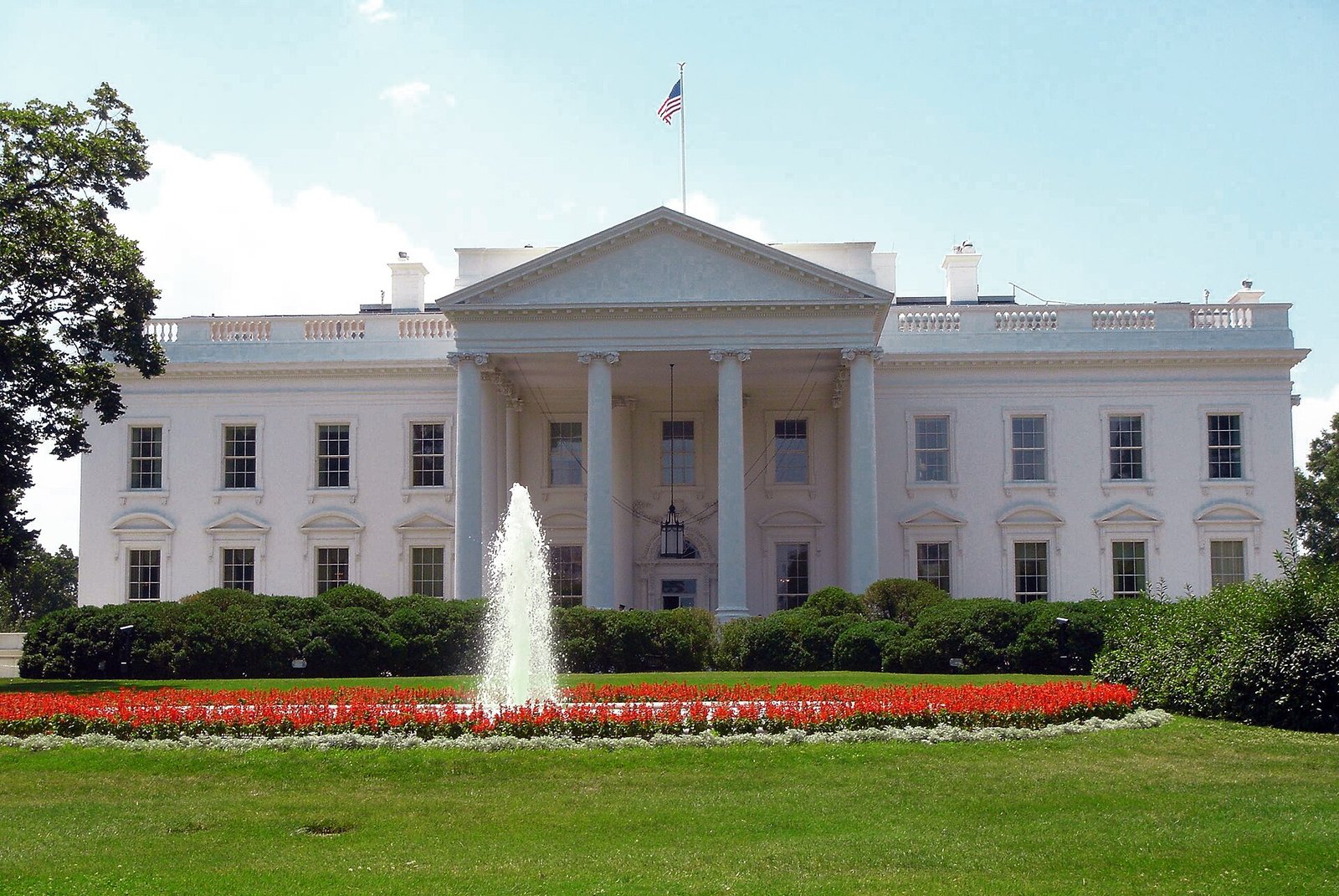
Featured image: The White House extended the $100,000 H-1B proclamation on 18 September 2026. · Photo: Nishkid64 / Wikimedia Commons, Public domain
How this article was made: researched and drafted with AI assistance by the 100xFounder editorial desk, using only the sources listed in it; every figure links to its source. Read our editorial policy, or report an error through our corrections policy.
Related stories


Sources (16)
- Federal Register 23 Sep 2026Proclamation 11069 text: extension to 21 Sept 2027, scope, 700+ payments, registration and wage-level statistics, DOL NPRM date
- The White House 18 Sep 2026Signing date and text of the extension proclamation
- Federal Register 23 Sep 2026Executive Order 14431 on layoffs and interagency review
- USCIS 15 Jun 2026D. Mass. vacatur on 8 June 2026 in State of California v. Mullin; DHS plans to collect if lifted
- USCIS 28 Jul 2026First Circuit denial of stay on 24 July 2026; DHS will comply
- USCIS 21 Sep 2026Payment applies to beneficiaries outside US without valid H-1B visa; court-order notice; 9-11 fee rule
- Federal Register 29 Dec 2025Weighted selection final rule, effective 27 Feb 2026
- USCIS 31 Mar 2026FY 2027 cap reached; filing from 1 April 2026 for at least 90 days
- USCIS 21 Sep 2026$215 registration fee; FY2024-FY2026 registration and selection counts
- Federal Register 25 Aug 2026Proposed $103,265 fee on cap-subject petitions; comments to 24 Sept 2026; cap-exempt excluded
- Federal Register 11 Sep 2026Proposal to remove 60-day grace period; comments to 10 Nov 2026
- Federal Register 10 Aug 20269-11 fee on all extension petitions from 9 Sept 2026
- USCIS 1 Oct 2026Form G-1055 fees: I-129, asylum program, fraud, P.L. 114-113, premium processing
- Fragomen 29 Dec 2025D.D.C. upheld fee on 23 Dec 2025 in Chamber of Commerce v. DHS; appeal filed
- Yale OISS 23 Sep 2026Extension effectively blocked while Massachusetts order stands
- Borderless Counsel 29 Sep 2026D.C. Circuit appeal still pending in late September 2026