Germany Opportunity Card and EU Blue Card for tech workers in 2026
Germany's 2026 Blue Card floor for IT is €45,934.20, and the Opportunity Card needs six points and €1,091 a month. Rules, points table and fees explained.
 Ishaan Vardhan19 Oct 2026 · 10 min read
If you already have a German job offer paying at least €45,934.20 a year in 2026, the EU Blue Card is usually the right visa for a tech worker. If you do not have an offer yet, the Opportunity Card (Chancenkarte) lets you live in Germany for up to a year while you look, as long as you score six points and can show €1,091 a month to support yourself. Both routes can lead to permanent residence, and the Blue Card can get you there in as little as 21 months.
This is general information, not immigration advice. Check current rules with the German mission in your country, make-it-in-germany.com or bamf.de, or speak to a qualified adviser before you apply.
Key takeaways
- The 2026 Blue Card salary floors are €50,700 for most jobs and €45,934.20 for shortage occupations, including IT professionals, and for recent graduates. Both apply from 1 January 2026.
- IT specialists without a degree can still get a Blue Card if they have at least three years of relevant experience gained in the last seven years and meet the lower salary floor.
- The Opportunity Card is a job-search residence permit for up to one year. You need either a fully recognised qualification or at least six points, plus basic German (A1) or English at B2.
- Opportunity Card holders may work an average of up to 20 hours a week and do trial jobs of up to two weeks each.
- Blue Card holders can get a settlement permit after 27 months, or after 21 months with B1 German.
The EU Blue Card in 2026: salary thresholds
Germany ties its Blue Card thresholds to the annual contribution ceiling of the statutory pension insurance. Section 18g of the Residence Act (Aufenthaltsgesetz) sets the general floor at 50% of that ceiling. It sets a lower floor of 45.3% for shortage occupations and for graduates who earned their degree no more than three years before applying, according to the law’s published text. For 2026 the ceiling is €101,400 a year, under the federal government’s social insurance figures regulation, according to the Federal Ministry of Labour.
| Blue Card category (2026) | Minimum gross salary a year |
|---|---|
| General threshold (50%) | €50,700 |
| Shortage occupations, including IT professionals, and recent graduates (45.3%) | €45,934.20 |
| IT specialists without a degree (45.3%) | €45,934.20 |
The German Missions in India confirm the same two numbers “starting from 1 January 2026.” They also list natural scientists, mathematicians, engineers, doctors and IT professionals as examples of shortage professions, according to their checklist for degree holders. If you are paid above €50,700, your visa does not need approval from the Federal Employment Agency (Bundesagentur für Arbeit). Between the two thresholds, the agency must approve. The missions also note that applicants aged 45 or over who earn less than €55,770 a year must show adequate pension provision.
Who qualifies for a Blue Card as a tech worker
With a degree
You need a German degree, or a foreign degree that is recognised or comparable to a German one, a job that matches your qualification, and a salary above the relevant threshold. For Indian applicants, the missions say your degree should be rated “entspricht” or “gleichwertig” (equivalent) in Germany’s anabin database, and your university should have an “H+” rating. If it does not, you need a Statement of Comparability from the Central Office for Foreign Education (ZAB). They also ask graduates of Indian universities to confirm they studied in regular mode, not by distance learning.
Without a degree
Section 18g(2) opens the Blue Card to IT specialists in ISCO-08 groups 133 (ICT service managers) and 25 (ICT professionals) who have no degree. They need professional skills based on at least three years of relevant experience gained within the last seven years, at a level comparable to a degree, and a salary of at least 45.3% of the pension ceiling. Federal Employment Agency approval is required. For self-taught developers this is one of the few work routes in the EU that does not demand a diploma.
What the Blue Card gives you
The Federal Office for Migration and Refugees (BAMF) sets out the main terms. The card is normally issued for four years, or for the length of your contract plus three months if that is shorter. You need a contract or binding job offer of at least six months. In your first 12 months, the immigration office can suspend a change of job for 30 days and refuse it within that period, according to BAMF.
- Faster permanent residence. You can get a settlement permit after 27 months of highly qualified work with pension contributions and basic German. With B1 German this falls to 21 months.
- Family. Spouses do not need to show German before joining you and can work without restriction.
- Visa-free entry for some nationals. Citizens of the US, Canada, the UK, Australia, Japan, South Korea, Israel and New Zealand can enter without a visa and apply in Germany within three months. Indian citizens must apply for a national visa first.
- EU mobility. If you have held a Blue Card in another EU country for at least 12 months, you can move to Germany without a visa and apply within one month.
For scale, Germany issued 41,215 Blue Cards in 2023, according to the European Commission’s EU Immigration Portal.
The Opportunity Card: looking for work from inside Germany
The Opportunity Card was created by Section 20a of the Residence Act. It is a residence permit to look for work, or to pursue recognition of a foreign qualification. Germany issues it first for up to one year (the “search” card). While you hold it, you may work an average of up to 20 hours a week. You may also do trial employment of up to two weeks at a time, as long as the trial is for a qualified role, according to the law.
If you find a qualifying job, the card can be extended as a “follow-up” Opportunity Card for up to two more years with Federal Employment Agency approval. That only applies if you do not qualify for another work permit such as the Blue Card. In practice, most tech hires switch straight to a Blue Card.
Two ways to qualify
Route 1, skilled worker: your degree or vocational qualification is fully recognised in Germany. You do not need points.
Route 2, points: you hold a degree, or a vocational qualification of at least two years, that is state-recognised in the country where you earned it. You also need at least basic German (A1) or English at B2, and at least six points. A competent German body must confirm the qualification requirement.
The Opportunity Card points table
The points come from Section 20b and the annex to the Residence Act. The language levels are defined in Section 2 of the Act.
| Criterion | Points |
|---|---|
| Partial recognition of your qualification (adaptation measures still needed) | 4 |
| German at B2 | 3 |
| German at B1 | 2 |
| German at A2 | 1 |
| English at C1 | 1 |
| At least 5 years of relevant experience in the last 7 years | 3 |
| At least 2 years of relevant experience in the last 5 years | 2 |
| Qualification in a shortage occupation group (including IT) | 1 |
| Aged 35 or under | 2 |
| Aged over 35 and up to 40 | 1 |
| At least 6 months’ lawful stay in Germany in the last 5 years | 1 |
| Spouse or partner also eligible and applying with you | 1 |
Language points do not stack: you get points for your highest German level only. The minimum is six. As a worked example, a 30-year-old developer with five years’ experience and English at C1 scores 2 + 3 + 1 + 1 (shortage occupation) = 7 points without any German. They still need either the A1 German certificate or B2 English to be eligible at all, and C1 English meets that requirement.
Money, paperwork and fees for Indian applicants
The German Missions in India publish the current practical requirements on their Opportunity Card checklist:
- Funds: proof of at least €1,091 a month for living costs. This is usually a blocked account (Sperrkonto) or a formal declaration of commitment from someone living in Germany.
- Health insurance valid from the day you enter.
- Language proof from a recognised provider, such as Goethe-Institut/Max Mueller Bhavan, ÖSD or telc for German. For English, the missions accept ALTE-standard certificates or TOEFL, but they do not accept Pearson PTE, Duolingo or online TOEFL results in India.
- Experience letters from previous employers showing exact dates and duties, plus a CV.
Applications go through the Federal Foreign Office’s Consular Services Portal. The national (D) visa fee is €75, or ₹8,300, for adults, payable in rupees at the appointment, according to the missions’ national visa page, updated on 1 October 2026. Indian salaries are often quoted in LPA (lakh rupees per annum, where one lakh is 100,000 rupees), but the Blue Card test uses the gross annual salary in euros on your German contract, so check that figure against the thresholds above. Our salary hike calculator can help you compare offers.
Blue Card or Opportunity Card: which should you choose?
If you can land a job before you move, choose the Blue Card. It gives you a four-year permit, a quicker route to settlement and simpler family reunification. Employers can also use the accelerated skilled-worker procedure under Section 81a to get pre-approval from the immigration office. The missions say this pre-approval is optional but shortens processing.
The Opportunity Card suits people who interview better in person, have budgeted a year of living costs, and are applying for roles where some German helps. The missions warn that job seekers who arrive without researching employers “rarely are successful.” Treat the card as a structured job search, not a holiday visa. Start applying from home, and use our jobs board for roles listed on official careers pages. If you are serving a long notice period in India, our notice period buyout calculator can help you plan your exit date.
Why it matters
Germany’s rules are unusually predictable. The IT Blue Card floor of €45,934.20 is published in advance and tied to a formula, there is no lottery, and people who learn some German can settle in under two years. The trade-offs are language and bureaucracy: degree recognition, blocked accounts and appointment queues take real time. For Indian engineers comparing Canada, the UK and the US, Germany is often the most rules-based option. If your degree checks out on anabin and your salary clears the floor, you are entitled to the Blue Card, because BAMF describes it as a legal entitlement once the conditions are met.
FAQ
What is the EU Blue Card salary for IT jobs in Germany in 2026?
€45,934.20 gross a year, which is 45.3% of the 2026 pension contribution ceiling of €101,400. Most other jobs need €50,700.
Can I get a German Blue Card without a degree?
Yes, if you work in IT (ISCO groups 133 or 25), have at least three years of relevant experience from the last seven years, earn at least €45,934.20 and get Federal Employment Agency approval.
How many points do I need for the Opportunity Card?
Six, unless your qualification is fully recognised in Germany, in which case you need no points. You also need A1 German or B2 English.
How much money do I need for the Chancenkarte?
The German Missions in India currently ask for proof of at least €1,091 a month, usually through a blocked account.
Can I work on an Opportunity Card?
Yes, an average of up to 20 hours a week, plus trial jobs of up to two weeks each. Once you get a qualifying offer, you would normally switch to a Blue Card or another work permit.
Sources
- Federal Ministry of Justice, “§ 18g AufenthG: Blaue Karte EU”, accessed 4 October 2026
- Federal Ministry of Justice, “§ 20a AufenthG: Chancenkarte”, accessed 4 October 2026
- Federal Ministry of Justice, “§ 20b AufenthG: Punktevergabe für die Chancenkarte” and Annex (points table), accessed 4 October 2026
- Federal Ministry of Justice, “§ 2 AufenthG: Begriffsbestimmungen” (language levels), accessed 4 October 2026
- Federal Ministry of Labour and Social Affairs, “Sozialversicherungsrechengrößen-Verordnung 2026”, 26 November 2025
- German Missions in India, “Holders of academic degrees” (Blue Card checklist), accessed 4 October 2026
- German Missions in India, “Opportunity Card” (checklist), accessed 4 October 2026
- German Missions in India, “National Visa”, 1 October 2026
- BAMF, “The EU Blue Card”, 18 November 2023
- European Commission, “EU Blue Card: Germany” (EU Immigration Portal), accessed 4 October 2026
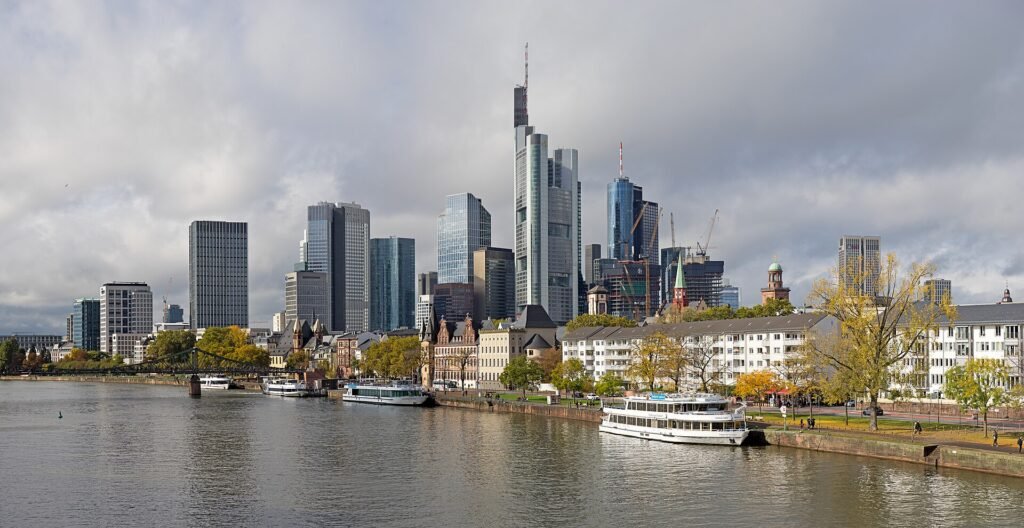
Featured image: The Opportunity Card and Blue Card rules are set in Germany's Residence Act. · Photo: Jörg Braukmann / Wikimedia Commons, CC BY-SA 4.0
How this article was made: researched and drafted with AI assistance by the 100xFounder editorial desk, using only the sources listed in it; every figure links to its source. Read our editorial policy, or report an error through our corrections policy.
Related stories

Sources (11)
- Federal Ministry of Justice (gesetze-im-internet.de) 4 Oct 2026Blue Card 50% and 45.3% thresholds; shortage ISCO groups; IT specialists without degree
- Federal Ministry of Justice (gesetze-im-internet.de) 4 Oct 2026Opportunity Card definition, 20-hour work, trial work, eligibility, validity and follow-up card
- Federal Ministry of Justice (gesetze-im-internet.de) 4 Oct 2026Opportunity Card points criteria
- Federal Ministry of Justice (gesetze-im-internet.de) 4 Oct 2026Points per criterion and six-point minimum
- Federal Ministry of Justice (gesetze-im-internet.de) 4 Oct 2026Definitions of A1, A2, B1, B2 German levels
- Federal Ministry of Labour and Social Affairs 26 Nov 20252026 pension contribution ceiling of €101,400
- German Missions in India 4 Oct 20262026 Blue Card thresholds; anabin/ZAB rules; 45+ pension rule at €55,770
- German Missions in India 4 Oct 2026Opportunity Card funds of €1,091 a month; accepted language tests; documents
- German Missions in India 1 Oct 2026National visa fee €75 / ₹8,300; Consular Services Portal
- BAMF 18 Nov 2023Blue Card validity, job-change rule, settlement after 27/21 months, family and visa-free nationals
- European Commission 4 Oct 202641,215 Blue Cards issued in Germany in 2023