HRA exemption calculation 2026: worked examples, old vs new regime
How to calculate HRA exemption in 2026 with the new 8-city 50% rule, step-by-step examples, a mid-year move, and when the old regime still beats the new one.
 Ishaan Vardhan14 Oct 2026 · 9 min read
Your HRA exemption is the lowest of three amounts: the HRA you actually received, the rent you paid minus 10% of your salary, and 50% of salary if you live in one of eight big cities (40% elsewhere). From the 2026-27 tax year, Bengaluru, Hyderabad, Pune and Ahmedabad joined Mumbai, Delhi, Kolkata and Chennai in the 50% group. The exemption exists only in the old tax regime; the default new regime gives no HRA relief at all.
House rent allowance (HRA) is the part of an Indian salary meant to cover rent. Below are the formula, five worked examples with every step shown, and a test of whether the old regime still makes sense for you.
Key takeaways
- “Salary” for HRA means basic pay plus dearness allowance (DA) where it is part of your terms, not your gross pay.
- The 50% limit covers eight cities from 1 April 2026; 2025-26 returns still use the old four-city list.
- Calculate separately for each period if your rent, city or salary changed during the year.
- If total rent tops ₹1 lakh (₹100,000) a year, give your employer the landlord’s PAN.
The HRA exemption formula
Under the Income-tax Act, 2025, HRA is exempt under Schedule III, Table Sl. No. 11, if four conditions hold, according to the Act: the allowance is specifically for rent, you pay rent, you don’t own the home you live in, and the amount stays within limits “prescribed having regard to the area or place” of the accommodation. Those limits are in Rule 279 of the Income-tax Rules, 2026, which CBDT notified on 20 March 2026 with effect from 1 April 2026, according to Taxmann.
The exempt HRA is the least of:
- Actual HRA received for the period.
- Rent actually paid minus 10% of salary for the period.
- 50% of salary for Mumbai, Kolkata, Delhi, Chennai, Hyderabad, Pune, Ahmedabad and Bengaluru; 40% for everywhere else.
That’s how the final rule was summarised by Upstox. The draft Rule 279 published for consultation defined salary as including DA where the terms of employment provide for it, but excluding all other allowances and perquisites, and measured everything over the “relevant period” in which you actually occupied the rented home, according to TaxGuru.
What changed from the old rules
For 2025-26 (assessment year 2026-27), which is still governed by the 1961 Act, the 50% limit applies only to Mumbai, Kolkata, Delhi and Chennai, and salary includes turnover-based commission, according to the Income Tax Department. The four new cities apply only from 2026-27 onward, TaxGuru noted. If you live in Bengaluru, Hyderabad, Pune or Ahmedabad, your limit for the year you are filing for now is still 40%.
Worked example 1: Bengaluru, before and after the change
Sneha lives in Bengaluru. Her monthly basic is ₹50,000 (no DA), HRA ₹25,000, and rent ₹28,000. Full year, nothing changes.
| Step | Calculation | Amount (annual) |
|---|---|---|
| Salary | ₹50,000 × 12 | ₹6,00,000 |
| Limit 1: HRA received | ₹25,000 × 12 | ₹3,00,000 |
| Limit 2: rent minus 10% of salary | ₹3,36,000 − ₹60,000 | ₹2,76,000 |
| Limit 3 (2026-27): 50% of salary | ₹6,00,000 × 50% | ₹3,00,000 |
| Limit 3 (2025-26): 40% of salary | ₹6,00,000 × 40% | ₹2,40,000 |
- 2026-27 exemption: least of ₹3,00,000, ₹2,76,000 and ₹3,00,000 = ₹2,76,000. Taxable HRA: ₹24,000.
- 2025-26 exemption: least of ₹3,00,000, ₹2,76,000 and ₹2,40,000 = ₹2,40,000. Taxable HRA: ₹60,000.
The new city rule shelters an extra ₹36,000. In the 30% slab, with 4% cess, that is about ₹36,000 × 31.2% = ₹11,232 less tax a year, but only if she opts for the old regime.
Worked example 2: a non-metro city
Imran works in Jaipur. Basic ₹40,000 a month, HRA ₹16,000, rent ₹15,000.
- Salary: ₹40,000 × 12 = ₹4,80,000.
- Limit 1: ₹16,000 × 12 = ₹1,92,000.
- Limit 2: ₹1,80,000 − ₹48,000 = ₹1,32,000.
- Limit 3: 40% × ₹4,80,000 = ₹1,92,000.
- Exempt: ₹1,32,000. Taxable HRA: ₹1,92,000 − ₹1,32,000 = ₹60,000.
Here rent is the binding limit, and paying more rent would raise the exemption until it reaches ₹1,92,000. Low rent relative to salary is the most common reason HRA ends up partly taxable.
Worked example 3: moving cities mid-year
Because the rule works period by period, a move means two calculations. Dev earns ₹50,000 basic and ₹20,000 HRA a month all year. He rents in Pune for ₹25,000 from April to September, then moves to Jaipur at ₹18,000 from October to March.
| Period | HRA received | Rent − 10% of salary | % of salary limit | Exempt |
|---|---|---|---|---|
| Pune, 6 months | ₹1,20,000 | ₹1,50,000 − ₹30,000 = ₹1,20,000 | 50% × ₹3,00,000 = ₹1,50,000 | ₹1,20,000 |
| Jaipur, 6 months | ₹1,20,000 | ₹1,08,000 − ₹30,000 = ₹78,000 | 40% × ₹3,00,000 = ₹1,20,000 | ₹78,000 |
Total exempt: ₹1,20,000 + ₹78,000 = ₹1,98,000. Taxable HRA: ₹2,40,000 − ₹1,98,000 = ₹42,000. Averaging rent over the year would give a different, wrong answer.
Old vs new regime: does HRA still matter?
The new regime under section 202 computes income without the Schedule III Sl. No. 11 exemption, which is HRA, according to the Act. It offers a ₹75,000 standard deduction and lower slabs instead; the old regime offers a ₹50,000 standard deduction plus HRA, section 80C-type deductions and home-loan interest.
The rates used below for 2026-27 come from the Finance Bill, 2026 memorandum, which says no change in rates was proposed. Under section 202, the new regime charges nothing up to ₹4 lakh, then 5%, 10%, 15%, 20% and 25% in ₹4 lakh steps, and 30% above ₹24 lakh. The old regime charges nothing up to ₹2.5 lakh, 5% to ₹5 lakh, 20% to ₹10 lakh and 30% above. A 4% health and education cess applies to both, according to the Finance Ministry. A full rebate makes income up to ₹12 lakh tax-free under the new regime (section 156).
Worked example 4: an ₹18 lakh salary in Bengaluru
Take Sneha from example 1 with a gross salary of ₹18,00,000 (basic ₹6,00,000, HRA ₹3,00,000, other allowances ₹9,00,000), HRA exemption of ₹2,76,000 and ₹1,50,000 of 80C-type investments such as employee PF.
| Old regime | New regime | |
|---|---|---|
| Gross salary | ₹18,00,000 | ₹18,00,000 |
| HRA exemption | − ₹2,76,000 | Not allowed |
| Standard deduction | − ₹50,000 | − ₹75,000 |
| 80C-type deductions | − ₹1,50,000 | Not allowed |
| Taxable income | ₹13,24,000 | ₹17,25,000 |
| Tax | ₹1,12,500 + 30% × ₹3,24,000 = ₹2,09,700 | ₹1,20,000 + 20% × ₹1,25,000 = ₹1,45,000 |
| Cess at 4% | ₹8,388 | ₹5,800 |
| Total | ₹2,18,088 | ₹1,50,800 |
The new regime is ₹67,288 cheaper. To break even, the old regime needs taxable income of about ₹11,08,333 (₹1,12,500 + 30% of the excess over ₹10 lakh = ₹1,45,000). That means total deductions of ₹17,50,000 − ₹11,08,333 = ₹6,41,667, or roughly ₹2,15,667 more than Sneha has. Large home-loan interest or similar deductions could close that gap; HRA alone doesn’t.
Worked example 5: a ₹12 lakh salary
Under the new regime, ₹12,00,000 − ₹75,000 = ₹11,25,000 of taxable income. That is below the ₹12 lakh rebate limit, so tax is zero and HRA makes no difference. Our in-hand salary calculator runs both regimes on your own salary breakdown.
Documents and proof
- Declaration to your employer: Form 124 replaces Form 12BB from April 2026, according to Legitpro Law in Mondaq. For 2025-26, Form 12BB is still listed as the form an employee uses to give HRA evidence to the employer, according to the e-filing portal.
- Landlord PAN: required where aggregate rent for the year exceeds ₹1,00,000, under both the old CBDT circular (No. 08/2013) cited by the Income Tax Department and the 2026 rules as reported by Upstox.
- Paying rent to parents: TaxGuru says Form 124 asks you to disclose your relationship to the landlord, and the landlord must report the rent as income in their own return. Keep a rent agreement, receipts and bank transfers.
- Missed the employer deadline? You can still claim the exemption in your return. The Income Tax Department says the exempt HRA is shown under allowances exempt from tax.

Common mistakes that cost you the exemption
- Using gross pay or CTC as “salary”. The 10% and 40%/50% tests use basic pay plus DA (and, under the 1961 rules, turnover-based commission). Using gross pay overstates the third limit and understates rent minus 10%.
- Claiming HRA on a home you own, or without paying rent. The Income Tax Department’s allowance table says HRA is fully taxable if you live in your own house or pay no rent. The new Act carries the same conditions in Schedule III.
- Applying the new cities too early. If you file a 2025-26 return now as a Bengaluru, Hyderabad, Pune or Ahmedabad renter, the limit is 40%, not 50%.
- Ignoring months without rent. The limits apply only to the period you actually occupied the rented home. Months spent in your own or your parents’ house, or between leases, get no exemption, even if HRA kept arriving in your payslip.
- Cash rent with no paper trail. Receipts alone are weak evidence. A registered or notarised agreement, bank transfers and the landlord’s PAN above the ₹1 lakh threshold are what stand up if the claim is questioned.
- Choosing the regime at the wrong moment. Your employer deducts TDS according to the regime you declare, but your final choice is made in the return. If your employer ignored your HRA because you were on the default regime, you can still claim it in a return filed by the due date.
Bottom line
If you rent in Bengaluru, Hyderabad, Pune or Ahmedabad, your HRA exemption can rise from 2026-27, but only under the old regime. For most people on moderate salaries, the new regime’s lower slabs and ₹12 lakh rebate still win. If you are weighing an offer in one of these cities, such as the roles on our Bengaluru engineering jobs page, ask how much of the pay is basic and HRA, and compare the take-home figures with our salary hike calculator. Run both calculations every year, and remember that the old regime option for salaried people is exercised in the return itself. The e-filing portal says that return must be filed by the due date to opt out of the default new regime.
This is general information, not tax advice. Confirm your numbers with a chartered accountant (CA) before you choose a regime or file.
FAQ
Which cities get 50% HRA exemption in 2026?
From the 2026-27 tax year: Mumbai, Delhi, Kolkata, Chennai, Bengaluru, Hyderabad, Pune and Ahmedabad. For 2025-26, only the first four.
Can I claim HRA under the new tax regime?
No. Section 202 of the Income-tax Act, 2025 removes the HRA exemption for anyone taxed under the new regime.
Is HRA calculated on gross salary?
No. It uses basic pay plus DA where DA is part of your terms. Under the 1961 rules, turnover-based commission is also included.
Can I claim HRA and a home loan together?
Possibly. One condition for HRA is that you don’t own the home you live in, so owning a flat in another city doesn’t by itself rule it out. Check the facts with a CA.
What if I don’t get HRA from my employer?
Then this exemption doesn’t apply, because it covers only an allowance your employer specifically pays for rent.
Sources
- Gazette of India (Ministry of Law and Justice), “The Income-tax Act, 2025 (No. 30 of 2025)“, 21 August 2025
- Taxmann, “CBDT Notifies Income Tax Rules 2026 Effective from 01-04-2026“, March 2026
- Upstox, “Final Income-tax Rules 2026 notified: HRA to New vs Old regime, what salaried employees must know“, 20 March 2026
- TaxGuru, “Draft Income Tax Rule 279: Limits for purposes of Schedule III Table Sl. No. 11“, 5 March 2026
- TaxGuru, “HRA Exemption: 8 Cities Now Qualify for 50% Exemption – A Practical Guide“, 30 March 2026
- Mondaq (Legitpro Law), “Income Tax Rules, 2026 Notified: HRA, Allowance And Form Changes That Salary Earners And Corporates Must Prepare For“, 26 March 2026
- Income Tax Department, “Allowances allowable to tax payer [AY 2026-27]“, accessed 4 October 2026
- Income Tax Department (e-Filing portal), “Returns and Forms Applicable for Salaried Individuals for AY 2026-27“, accessed 4 October 2026
- Ministry of Finance (India Budget), “Finance Bill, 2026: Memorandum explaining the provisions relating to direct taxes“, 1 February 2026
- Income Tax Department, “Where is House Rent allowance (HRA) to be reflected while filing income-tax return (ITR)?“, accessed 4 October 2026
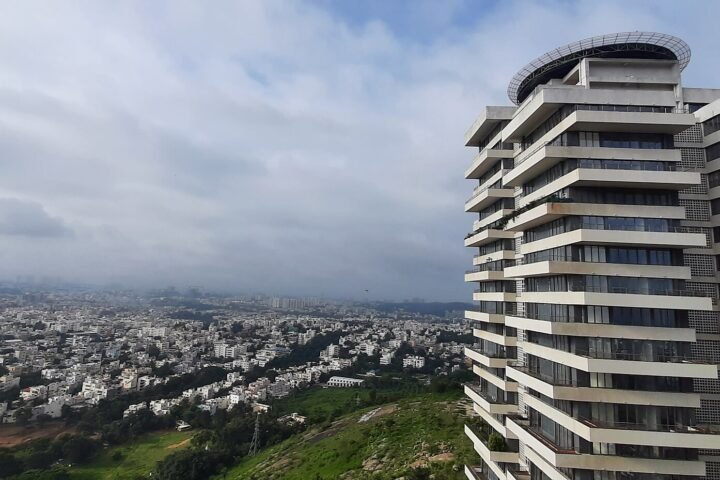
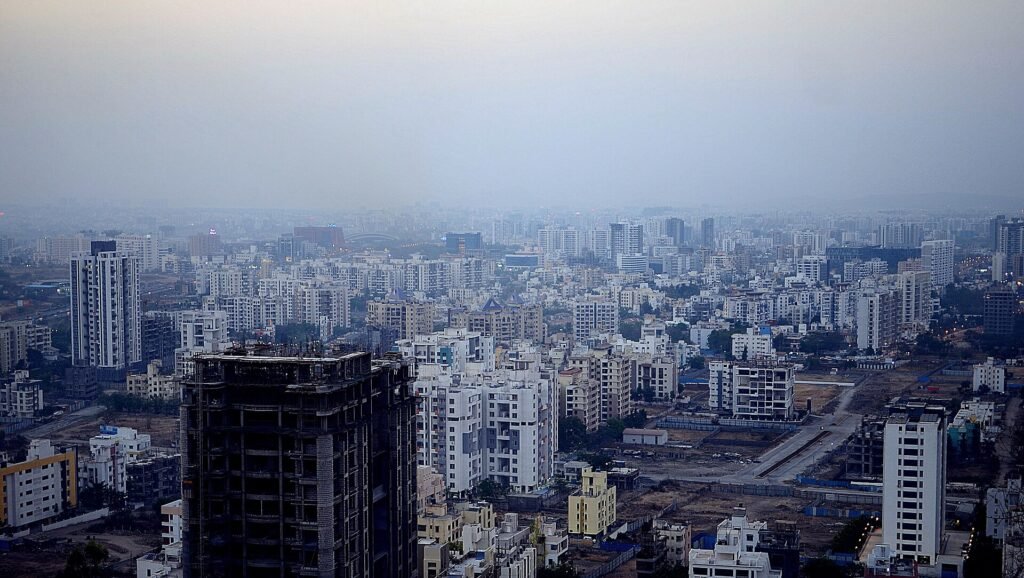
Featured image: Bengaluru renters get the 50% HRA limit from the 2026-27 tax year. · Photo: Bharatahs / Wikimedia Commons, CC BY-SA 3.0
Related stories



Sources
- Gazette of India (Ministry of Law and Justice) 21 Aug 2025Schedule III Sl. No. 11 conditions for HRA; section 202(2) excludes it in new regime; section 202(1) slabs; section 19 standard deduction ₹75,000/₹50,000; section 156 rebate up to ₹12 lakh
- Taxmann 20 Mar 2026Income-tax Rules 2026 notified by G.S.R. 198(E) dated 20 March 2026, effective 1 April 2026
- Upstox 20 Mar 2026Rule 279 formula; 8 cities at 50%; HRA only in old regime; landlord PAN where rent exceeds ₹1,00,000
- TaxGuru 5 Mar 2026Draft rule text: salary includes DA if terms provide, excludes other allowances; relevant period
- TaxGuru 30 Mar 20268-city rule applies from FY 2026-27, FY 2025-26 uses 4 cities; Form 124 replaces 12BB with landlord relationship disclosure; landlord declares rent
- Mondaq (Legitpro Law) 26 Mar 2026Form 124 replaces Form 12BB; 8-city HRA rule
- Income Tax Department 4 Oct 20261961 Act HRA rule for AY 2026-27: four cities at 50%, salary definition incl. turnover commission, landlord PAN above ₹1 lakh per Circular 08/2013
- Income Tax Department (e-Filing portal) 4 Oct 2026Form 12BB for HRA evidence; regime option in ITR filed by due date for non-business cases
- Ministry of Finance (India Budget) 1 Feb 2026No change in rates for tax year 2026-27; old regime slabs; 4% cess
- Income Tax Department 4 Oct 2026Exempt HRA is disclosed under allowances exempt from tax in the ITR