Gratuity calculation in India 2026: formula, tax and Labour Codes
How gratuity is calculated in 2026: the 15/26 formula, who qualifies, the ₹20 lakh tax cap, and what the Labour Codes changed for wages and fixed-term staff.
 Ishaan Vardhan13 Oct 2026 · 10 min read

Gratuity in India is a lump sum your employer pays when you leave after long service: 15 days of your last-drawn wages for every completed year, worked out as monthly wages × 15/26 × years, and capped at ₹20 lakh (₹2 million; 1 lakh = 100,000). Since the four Labour Codes took effect on 21 November 2025, the “wages” used in that formula can be higher than your basic pay, and fixed-term employees qualify after one year instead of five.
This guide walks through the formula, eligibility, the income-tax treatment under the new Income-tax Act, 2025, and four worked examples with every step shown.
Key takeaways
- Formula: last-drawn monthly wages × 15/26 × completed years of service, where any part-year above six months counts as a full year.
- Eligibility: five years of continuous service for regular employees; one year for fixed-term employees; no minimum on death or disablement.
- Labour Codes: “wages” now means basic + dearness allowance (DA) + retaining allowance, plus any excluded allowances above 50% of total pay.
- Tax: exempt up to the least of the formula amount, the actual gratuity and ₹20 lakh (a lifetime cap), under both tax regimes.
What changed in 2025 and 2026
The Payment of Gratuity Act, 1972 used to govern private-sector gratuity. It is one of 29 central laws folded into four Labour Codes that the government made effective from 21 November 2025, according to the Press Information Bureau (PIB). Gratuity now sits in Chapter V of the Code on Social Security, 2020.
The detailed rules followed later. The Social Security (Central) Rules, 2026 and the matching rules under the other three Codes were published on 8 and 9 May 2026 for establishments where the Centre is the “appropriate government”, according to a client alert from law firm Cyril Amarchand Mangaldas. The same alert said state governments were expected to follow with their own rules, so the paperwork for a company regulated by a state can still differ. The Ministry of Labour’s FAQ says old rules stay in force during the transition to the extent they are consistent with the Codes, and that the Code’s gratuity provisions apply from 21 November 2025, not retrospectively, according to the Ministry of Labour and Employment.
Who is eligible for gratuity
Chapter V of the Code applies to every factory, mine, oilfield, plantation, port and railway company, and to every shop or establishment that employs, or employed on any day in the previous 12 months, ten or more people, according to the Code’s First Schedule. Once an employer is covered, section 53 makes gratuity payable when employment ends after at least five years of continuous service, whether by retirement, resignation, termination, death or disablement, or the end of a fixed-term contract.
The exceptions to the five-year rule
- Fixed-term employees (FTEs): eligible after one year of continuous service, PIB’s December 2025 year-end review confirms, paid on a pro-rata basis.
- Death or disablement: no minimum service; the amount goes to the nominee or legal heirs.
- Working journalists: three years instead of five, under the first proviso to section 53.
What “continuous service” means
Section 54 counts sickness, accident, authorised leave, lay-off, strikes and lock-outs that are not your fault as continuous service. If you were not in uninterrupted service, a year still counts if you actually worked at least 240 days in the preceding 12 months (190 days underground in a mine or in an establishment that works fewer than six days a week). Paid leave earned in the previous year and up to 26 weeks of maternity leave count as days worked.
The gratuity formula, step by step
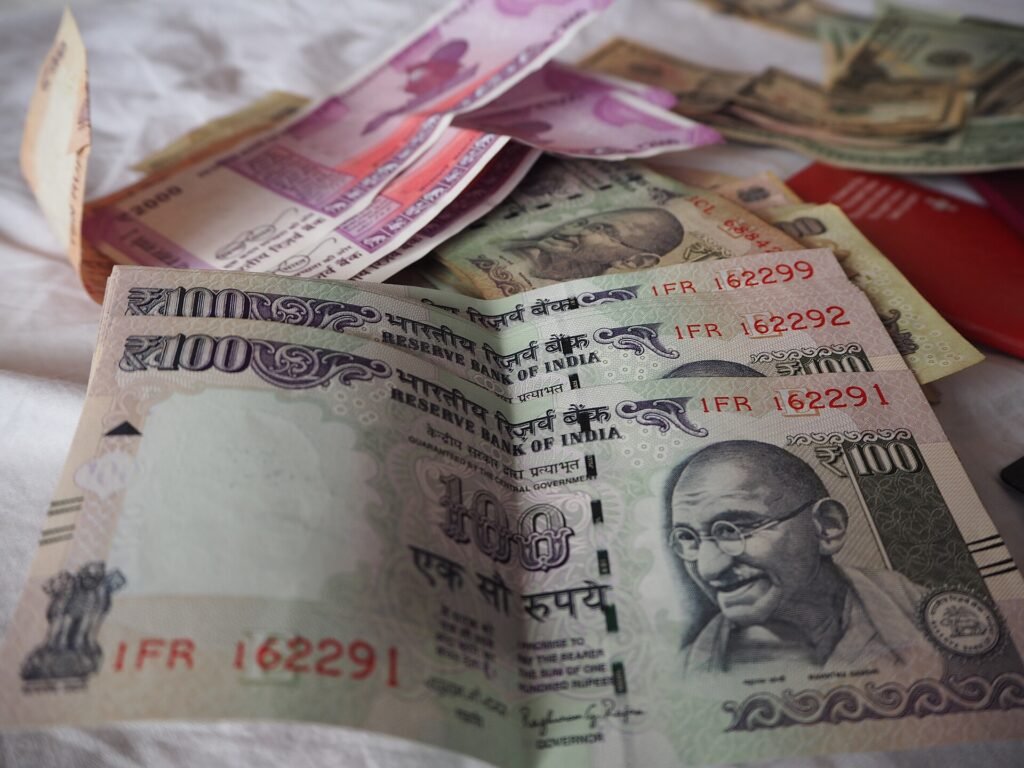
Section 53(2) of the Code sets gratuity at 15 days’ wages for every completed year of service or part of a year above six months, at the rate last drawn. Explanation 3 to the section turns that into a monthly formula: divide monthly wages by 26 (treated as working days) and multiply by 15.
Gratuity = last-drawn monthly wages × 15 ÷ 26 × completed years of service
Three details matter:
- Rounding: 7 years 8 months becomes 8 years; 6 years 5 months stays 6.
- Ceiling: the Ministry of Labour’s FAQ says the maximum statutory gratuity, as notified by the Centre, is currently ₹20 lakh.
- Better terms: section 53(5) lets an employer pay more under a contract, policy or settlement. Tax treatment of the excess is covered below.
Section 56(3) gives the employer 30 days from the date gratuity becomes payable to pay it; after that, simple interest is due.
Worked example 1: a regular employee
Priya’s last-drawn wages are ₹60,000 a month and she resigns after 7 years and 8 months.
- Service counted: 8 years (8 months is more than six).
- ₹60,000 × 15 ÷ 26 = ₹34,615.38 for each year.
- ₹34,615.38 × 8 = ₹2,76,923.
Had she left at 6 years and 5 months, only 6 years would count: ₹34,615.38 × 6 = ₹2,07,692. Those five extra months of service are worth almost ₹70,000, which is worth knowing before you time a resignation or negotiate a notice-period buyout with our notice period buyout calculator.
How the Labour Codes change “wages”
Under the old Act, employers typically calculated gratuity on basic pay plus DA, so many offer letters kept basic low and paid the rest as allowances. The single definition of wages in the Codes narrows that gap. The Ministry of Labour’s FAQ explains that wages cover basic pay, DA and retaining allowance; if the other allowances together exceed 50% of total remuneration, the excess is added back to wages for statutory calculations. Performance incentives, ESOPs, variable pay and reimbursements are not part of wages, and the same definition applies across all four Codes.
The ministry’s own illustration uses total pay of ₹76,000 a month with basic and DA of ₹20,000: allowances above the 50% limit (₹2,000 in that example) are added back, so statutory calculations run on ₹22,000.
Worked example 2: a low-basic salary structure
Arjun earns ₹1,00,000 a month: ₹30,000 basic, no DA, and ₹70,000 in allowances that are not wages. He leaves after exactly 10 years, all of it under the new definition.
- 50% of total remuneration: ₹1,00,000 × 50% = ₹50,000.
- Allowances above the limit: ₹70,000 − ₹50,000 = ₹20,000, added back to wages.
- Wages for gratuity: ₹30,000 + ₹20,000 = ₹50,000.
- Gratuity: ₹50,000 × 15 ÷ 26 × 10 = ₹2,88,462.
On basic pay alone, it would have been ₹30,000 × 15 ÷ 26 × 10 = ₹1,73,077, so the broader wage base adds ₹1,15,385. Because the ministry says the Code applies from 21 November 2025, ask HR how service before that date is being valued; the FAQ itself only tells employers to “make provision as per accounting norms”.
Worked example 3: a fixed-term contract
Meera is hired on an 18-month fixed-term contract at ₹40,000 a month in wages. The Code says fixed-term employees are paid gratuity pro rata, and the ministry’s FAQ puts eligibility at one year of service under the contract.
- One year’s gratuity: ₹40,000 × 15 ÷ 26 = ₹23,077.
- Pro-rated for 1.5 years: ₹23,077 × 1.5 = ₹34,615.
The Codes do not spell out the exact pro-rata method used here (months of service ÷ 12), and whether back-to-back renewals add up to one year is a question to put to your employer in writing. Treat this as an estimate.
Is gratuity taxable? The ₹20 lakh exemption
From 1 April 2026, gratuity is taxed under the Income-tax Act, 2025, which replaced the 1961 Act. Section 19(1) of the new Act lists gratuity in its table of deductions from salary, according to the Act as published in the Gazette of India:
- Government employees: death-cum-retirement gratuity is fully exempt (Sl. No. 3).
- Employees covered by the gratuity law: exempt up to the amount calculated under section 4(2) and 4(3) of the Payment of Gratuity Act, 1972, which is the 15/26 formula and the ceiling (Sl. No. 5).
- Everyone else: exempt up to the least of the actual gratuity, a limit notified by the Centre, and half a month’s average salary (over the last ten months) for each completed year (Sl. No. 6).
The notified limit has been ₹20 lakh since a CBDT notification of 8 March 2019, ClearTax notes, and section 19(2) makes it a lifetime cap: anything exempted in earlier years, from any employer, is deducted from the ₹20 lakh. Because the new tax regime in section 202 excludes only certain listed exemptions, and gratuity is not among them, the exemption works in both the old and new regimes.
Worked example 4: gratuity above the cap
Ramesh retires after 22 years with last-drawn wages of ₹2,50,000 a month. His employer’s policy pays ₹35 lakh.
- Formula amount: ₹2,50,000 × 15 ÷ 26 × 22 = ₹31,73,077.
- Exempt: the least of ₹35,00,000 (actual), ₹31,73,077 (formula) and ₹20,00,000 (cap) = ₹20,00,000.
- Taxable: ₹35,00,000 − ₹20,00,000 = ₹15,00,000, added to his salary income for the year.
An employee who receives arrears or a large lump sum can ask about relief using Form 10E, which the Income Tax Department lists for gratuity among other payments, according to the e-filing portal.
The open tax question
There is a mismatch between the two laws. The Income-tax Act, 2025 still points to the repealed Payment of Gratuity Act, while gratuity is now paid on the Code’s wider wage base. In a representation published on 21 July 2026, the American Chamber of Commerce in India said the two had “not yet been fully aligned”, flagging different tax treatment for employees in similar positions and asking CBDT to amend the law or clarify it, according to AMCHAM India. Until CBDT acts, employers may compute the exempt portion conservatively, so check your Form 16 or Form 130 when you receive it.
How to claim gratuity and what to check
- Nomination: section 55 asks employees who have completed one year of service to make a nomination. Check that yours is on file.
- Application: section 56 says the employer must work out the amount and notify you whether or not you apply, but sending a written request on your last working day creates a record.
- Payment: expect it within 30 days. If it is late or disputed, the Code lets you approach the competent authority, and late payments carry interest.
- Payslip check: confirm which “wages” figure HR used, especially if your basic is below half of your gross pay.
Gratuity is one line of your cost to company (CTC) that you don’t see monthly. Our in-hand salary calculator shows how basic pay, allowances and deductions turn CTC into take-home pay, and the salary hike calculator helps compare offers that structure basic pay differently.
Bottom line
The 15/26 formula hasn’t changed, but the number it multiplies may be bigger. If your basic pay is less than half your gross, the 50% wage rule can raise your gratuity meaningfully for service after 21 November 2025. Fixed-term staff now get gratuity at all. On tax, ₹20 lakh across your whole career stays exempt in either regime, and anything above that is taxed as salary. Watch for CBDT guidance aligning the Income-tax Act with the Code, because that could change how the exempt slice is worked out.
This is general information, not tax or legal advice. Confirm your figures with a chartered accountant (CA) or your employer’s HR team before acting.
FAQ
Can I get gratuity after 4 years and 8 months?
For a regular employee the law still requires five years of continuous service. Section 54 counts a year as continuous if you actually worked 240 days in it (190 in some establishments), so check your attendance record with HR. Fixed-term employees qualify after one year.
Is gratuity calculated on basic or gross salary?
Neither exactly. It’s calculated on “wages”: basic + DA + retaining allowance, plus any excluded allowances that exceed 50% of your total remuneration.
Why divide by 26 and not 30?
Explanation 3 to section 53 of the Code fixes the formula for monthly-rated employees as monthly wages ÷ 26 × 15, treating a month as 26 working days.
Is gratuity taxable under the new tax regime?
The exemption is available in both regimes. Up to ₹20 lakh over your lifetime is exempt, subject to the formula; anything above is taxed as salary.
Can my employer pay more than ₹20 lakh?
Yes. Section 53(5) protects better terms under a contract or award, but the excess over the exempt limit is taxable.
Sources
- Press Information Bureau (Ministry of Labour & Employment), “Government Makes the Four Labour Codes effective to Simplify and Streamline Labour Laws“, 21 November 2025
- Ministry of Labour and Employment, “FAQs on Labour Codes“, January 2026
- India Code (Legislative Department), “The Code on Social Security, 2020 (as on 21 November 2025)“, as on 21 November 2025
- Press Information Bureau (Ministry of Labour & Employment), “Year End Review 2025“, 30 December 2025
- Cyril Amarchand Mangaldas, “Implementation of Central Rules under the Labour Codes“, 12 May 2026
- Gazette of India (Ministry of Law and Justice), “The Income-tax Act, 2025 (No. 30 of 2025)“, 21 August 2025
- ClearTax, “Income Tax Exemption on Gratuity“, accessed 4 October 2026
- AMCHAM India, “Representation – Tax Exemption for Gratuity Received“, 21 July 2026
- Income Tax Department (e-Filing portal), “Returns and Forms Applicable for Salaried Individuals for AY 2026-27“, accessed 4 October 2026
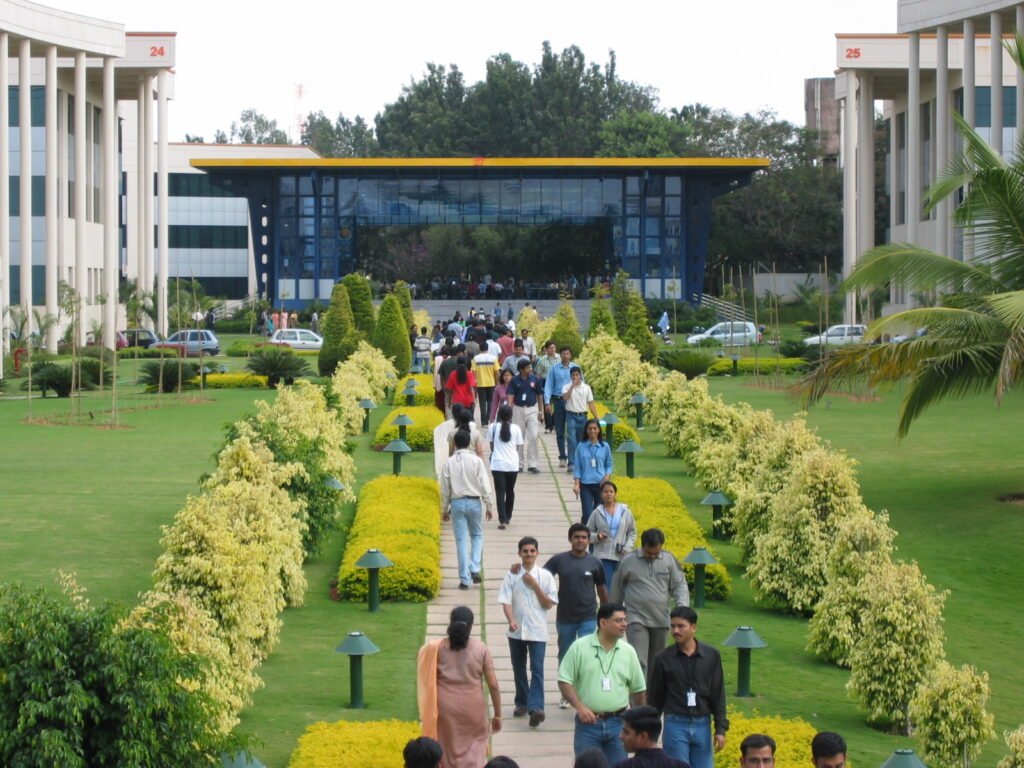
Featured image: Office parks such as Manyata in Bengaluru employ thousands of salaried staff covered by gratuity rules. · Photo: KshitizBathwal / Skyscape Photography / Wikimedia Commons, CC BY-SA 4.0
Related stories


Sources
- Press Information Bureau (Ministry of Labour & Employment) 21 Nov 2025Four Labour Codes effective from 21 November 2025, replacing 29 laws; FTE gratuity after one year
- Ministry of Labour and Employment 1 Jan 2026Transition rules; wages definition and 50% rule with illustration; gratuity applicable from 21 Nov 2025; payment events; 15 days' wages; ₹20 lakh ceiling; FTE pro rata
- India Code (Legislative Department) 21 Nov 2025Sections 53-56: eligibility, formula, 26-day divisor, continuous service (240/190 days), nomination, 30-day payment; First Schedule applicability (10+ employees)
- Press Information Bureau (Ministry of Labour & Employment) 30 Dec 2025Uniform wage definition; gratuity extended to fixed-term employees after one year
- Cyril Amarchand Mangaldas 12 May 2026Central Rules under the four Codes notified 8-9 May 2026; states expected to follow
- Gazette of India (Ministry of Law and Justice) 21 Aug 2025Section 19(1) table Sl. Nos. 3, 5, 6 on gratuity; section 19(2) lifetime aggregate limit; section 202(2) list of exemptions excluded under new regime
- ClearTax 4 Oct 2026₹20 lakh limit notified by CBDT Notification S.O. 1213(E) dated 8 March 2019
- AMCHAM India 21 Jul 2026Income-tax Act 2025 not yet aligned with Code on Social Security; references to repealed Payment of Gratuity Act; request to CBDT
- Income Tax Department (e-Filing portal) 4 Oct 2026Form 10E for relief on gratuity and other lump sums