Open-weight vs closed AI models in 2026: which should startups use?
DeepSeek, Qwen, Mistral and Llama vs OpenAI, Anthropic and Google: licences, token prices, GPU costs and data privacy compared for founders in 2026.
 Ishaan Vardhan26 Oct 2026 · 10 min read
Most startups should build their first product on a closed API (OpenAI, Anthropic or Google), then move high-volume or sensitive workloads to an open-weight model such as DeepSeek V4.1, Qwen3.8, Mistral Small 4 or gpt-oss once usage is predictable. Open weights now come close to closed models on price and capability. The real differences are in licence terms, data control and how much infrastructure work you’re willing to take on. This guide compares both routes as of 6 October 2026, using the vendors’ own licence and pricing pages.
The question is timely because the open-weight field shifted this year. DeepSeek released V4.1-Flash under the MIT licence on 10 September. Meta made its flagship Muse Spark proprietary in April, then released an open model, Muse Glimmer, in August. And the biggest new Qwen and Mistral models no longer come with plain open licences.
Key takeaways
- “Open” no longer means one thing. DeepSeek (MIT), gpt-oss, Gemma 4, Muse Glimmer and Mistral Small 4 (Apache 2.0) are permissive. Mistral Medium 3.5 bars companies earning over $20 million a month, and Llama 4 has a 700-million-user cap and EU limits on multimodal use.
- Hosted open models are cheap. DeepSeek V4.1-Flash costs $0.30 in and $1.20 out per million tokens at peak on DeepSeek’s own API, against $2 and $10 for OpenAI’s GPT-6.1 Sol.
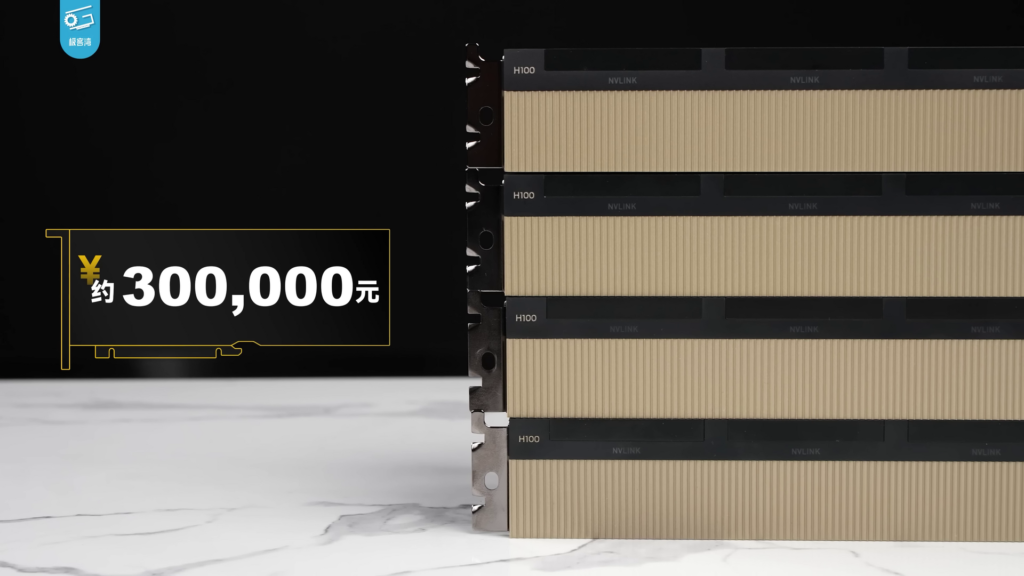
- Self-hosting pays only at scale. One dedicated H100 GPU on Together AI costs $5.49 an hour, or about $3,950 for a month running non-stop.
- Privacy is a hosting choice. The big closed APIs don’t train on paid API data by default. DeepSeek’s own app and API store data in China, but its MIT-licensed weights can run on servers you choose.
Open-weight, open source and closed: what the labels mean
A closed model (GPT-6, Claude, Gemini) is only reachable through its maker’s API or apps. You never see the weights, and the vendor decides prices, rate limits and when old versions retire. An open-weight model publishes its trained weights for download, so you can run it on your own servers, fine-tune it and ship it inside your product. “Open source” in the strict sense also implies an approved licence with no use restrictions. Most open-weight models don’t release their training data, and several use custom licences that add conditions.
For a startup, the practical test is simple. Read the licence file in the model repository before you build on it, and check it again when you upgrade, because terms can change between versions from the same lab.
Open-weight licences compared
| Model | Licence | What to watch |
|---|---|---|
| DeepSeek V4.1-Flash | MIT | Permissive. 552B parameters (8B to 16B active), 1M-token context |
| Qwen3.8-27B | Apache 2.0 | Permissive. 262K native context, extendable to 1M |
| Qwen3.8-2.4T-A95B | Proprietary Qwen3.8-Max licence | Weights published, but not under an open licence |
| Mistral Small 4 (119B) | Apache 2.0 | Permissive |
| Mistral Medium 3.5 (128B) | Modified MIT | No rights if company revenue tops $20M a month |
| Llama 4 (Scout, Maverick) | Llama 4 Community Licence | 700M MAU cap, “Built with Llama” branding, EU multimodal limit |
| gpt-oss-120b | Apache 2.0 | Runs on a single 80GB GPU |
| Gemma 4 31B | Apache 2.0 | Permissive |
| Muse Glimmer 30B | Apache 2.0 | Built for on-device agents |
| Sarvam-105B | Apache 2.0 | Trained with a focus on 22 Indian languages |
Sources: model cards on Hugging Face for DeepSeek, Qwen3.8-27B, Qwen3.8-2.4T, Mistral Small 4, Mistral Medium 3.5, gpt-oss-120b, Gemma 4, Muse Glimmer and Sarvam-105B, plus Meta’s Llama 4 licence.
The fine print that catches startups
Mistral Medium 3.5. The licence file says you may not exercise any rights if your company’s (or your employer’s) global consolidated monthly revenue exceeded $20 million the previous month. The restriction carries over to derivatives and fine-tunes. Above that line you need a commercial licence from Mistral or its hosted service. Most seed and Series A startups sit well below it, but an enterprise customer may not, so check before you ship it into a client’s environment.
Llama 4. Meta’s community licence requires a separate licence once your products pass 700 million monthly active users. It also asks you to display “Built with Llama” and to start the name of any derived model with “Llama”. Its acceptable use policy withholds the multimodal licence from individuals domiciled in the EU and from companies headquartered there, though end users of products built on the models aren’t affected. That matters to Indian startups with a European entity.
Meta’s direction. Meta debuted Muse Spark on 8 April, and Mark Zuckerberg said it plans to release new open source models too, according to TechCrunch. In August it released Muse Glimmer, a 30-billion-parameter model with Apache 2.0 weights designed to run agents on consumer hardware, TechCrunch reported. Llama 4 remains available, but the newest Llama checkpoints on Meta’s Hugging Face page date from April 2025.
Cost: API pricing versus hosting your own
Here’s what one million tokens costs on standard, pay-as-you-go pricing as of 6 October 2026.
| Model | Input / output per 1M tokens | Where |
|---|---|---|
| GPT-6 Astra | $10 / $50 | OpenAI API |
| GPT-6.1 Sol | $2 / $10 | OpenAI API |
| GPT-6 Luna | $0.10 / $0.50 | OpenAI API |
| Claude Opus 5.5 | $4 / $20 | Anthropic API |
| Claude Sonnet 5.5 | $2 / $10 | Anthropic API |
| Claude Haiku 4.5 | $1 / $5 | Anthropic API |
| Gemini 3.1 Pro Preview | $2 / $12 (prompts up to 200K) | Gemini API |
| Gemini 3.8 Flash | $0.75 / $3.75 (doubles 1 January 2027) | Gemini API |
| DeepSeek V4.1-Flash | $0.30 / $1.20 peak; $0.15 / $0.60 off-peak | DeepSeek API |
| DeepSeek V4-Pro | $1.32 / $3.96 peak | DeepSeek API |
| gpt-oss-120b | $0.15 / $0.60 | Together AI |
| Muse Glimmer 30B | $0.35 / $1.50 | Together AI |
Sources: OpenAI, Anthropic, Google, DeepSeek and Together AI. DeepSeek’s peak hours are 01:00–04:00 and 06:00–10:00 UTC on weekdays. Both OpenAI and Anthropic offer 50% off for batch jobs.
Self-hosting changes the maths from per-token to per-hour. Together AI lists a dedicated NVIDIA HGX H100 at $5.49 per GPU-hour and a B200 at $8.99. By our arithmetic, one H100 running for 30 days costs about $3,950. The same money buys roughly 3.3 billion output tokens of DeepSeek V4.1-Flash on Together’s serverless API, or about 395 million output tokens of GPT-6.1 Sol. A dedicated GPU only wins if you keep it busy around the clock, or if you need the isolation more than the savings.
Size matters too. OpenAI says gpt-oss-120b fits on a single 80GB GPU, according to its model card, and Muse Glimmer’s model card describes quantised builds for 24GB to 32GB graphics cards. DeepSeek’s 552-billion-parameter V4.1-Flash needs a multi-GPU server, which is why most teams use it through an API.
Control, customisation and lock-in
Open weights give you three things an API can’t. You can freeze a version, so a model update never silently changes your product’s behaviour. You can fine-tune deeply on your own data, including full-weight training rather than the limited tuning some APIs offer. And you can switch hosts: the same DeepSeek or Qwen weights run on DeepSeek, Together, your own cloud account or an on-premise server.
Closed APIs win on everything around the model. You get frontier capability, tool use, long context, safety filters and uptime without hiring an inference team. Prices also keep falling: OpenAI’s GPT-6 Luna, at $0.10 in and $0.50 out per million tokens, is cheaper than gpt-oss-120b on Together AI. For a five-person team, the engineering hours saved usually outweigh the per-token premium.
The sensible middle path is to write your app against an abstraction layer that speaks the common chat-completions format. Many open-model hosts accept it, so swapping a closed model for an open one is a configuration change rather than a rewrite.
Data privacy and where your data goes
All three big closed APIs say they don’t train on paid API traffic by default. OpenAI says API data isn’t used to train its models unless you opt in, and keeps abuse-monitoring logs for up to 30 days, according to its data controls guide. Zero Data Retention needs OpenAI’s approval. OpenAI also lists India as a data residency region, but it covers storage only, not processing, and requires extra approval. Anthropic says it won’t use inputs or outputs from its commercial products, including the API, for training by default, unless you submit feedback or opt in, according to its privacy centre. Google’s Gemini API pricing page says free-tier content is used to improve its products and paid-tier content isn’t. Don’t send customer data through a free key.
Open weights put the decision in your hands. DeepSeek’s privacy policy, updated 10 February 2026, says it collects, processes and stores personal data in the People’s Republic of China. That applies to its own app and API, not to the weights. Run DeepSeek V4.1-Flash on a server in Mumbai or Hyderabad and your prompts never reach DeepSeek. India also offers a public option. The government’s Bhashini platform now hosts open-sourced Sarvam models on what it calls a sovereign cloud, according to a PIB release of 12 March 2026.
This is general information, not legal advice. For obligations under India’s Digital Personal Data Protection Act or the EU’s GDPR, confirm with a qualified lawyer.
A decision framework for founders
- Pre-product-market fit: use a closed API. Speed of iteration matters more than cost, and frontier models hide prompt weaknesses.
- High-volume, simple tasks (classification, extraction, routing): test a hosted open model such as gpt-oss-120b or DeepSeek V4.1-Flash. Output costs can be a fraction of frontier-model rates.
- Regulated or sensitive data (health, finance, government): self-host an Apache 2.0 or MIT model in your own cloud region, or use a closed API with a signed zero-retention agreement.
- Indian languages: evaluate Sarvam-105B, which says it was trained with a focus on 22 Indian languages, against a frontier API on your own test set.
- On-device or offline: Muse Glimmer, Gemma 4 or the smaller Qwen3.8 models.
- Enterprise customers above $20M monthly revenue: avoid Mistral Medium 3.5 unless you or they hold a commercial licence.
Teams with machine-learning engineers can make the move to open weights sooner. If you’re hiring for that skill set, or looking for such a role, our AI and ML jobs board lists openings at companies including OpenAI and Anthropic.
Bottom line: Start closed and design for portability. Move to open weights when one of three things happens: your token bill becomes a top-three cost, a customer contract demands that data stay on your infrastructure, or you need a model version that never changes. Whichever way you go, read the licence file, not the press release.
Frequently asked questions
Is DeepSeek safe for an Indian startup to use?
Its own app and API store data in China, according to its privacy policy. The MIT-licensed weights can be self-hosted or used through a third-party host, so your data never reaches DeepSeek.
Can I use Llama 4 commercially?
Yes, under the Llama 4 Community Licence, until your products pass 700 million monthly active users. You must show “Built with Llama”. EU-based companies don’t get the licence for its multimodal models.
Which open-weight model is cheapest to run?
On Together AI, gpt-oss-120b costs $0.15 per million input tokens and $0.60 per million output tokens as of 6 October 2026. It also fits on one 80GB GPU if you host it yourself.
Do OpenAI, Anthropic and Google train on my API data?
Not by default on paid API use, according to each company. Google’s free Gemini API tier is an exception: free-tier content is used to improve its products.
Is Mistral still open source?
Partly. Mistral Small 4 uses Apache 2.0, but Mistral Medium 3.5 uses a modified MIT licence that bars companies with more than $20 million in monthly revenue.
Sources
- Hugging Face / DeepSeek, “DeepSeek-V4.1-Flash model card”, 10 September 2026
- DeepSeek, “Models & Pricing”, accessed 6 October 2026
- DeepSeek, “Privacy Policy”, 10 February 2026
- Hugging Face / Qwen, “Qwen3.8-2.4T-A95B model card”, August 2026
- Hugging Face / Qwen, “Qwen3.8-27B-FP8 model card”, 13 August 2026
- Hugging Face / Mistral AI, “Mistral-Medium-3.5-128B model card and licence”, accessed 6 October 2026
- Hugging Face / Mistral AI, “Mistral-Small-4-119B-2603 model card”, accessed 6 October 2026
- Meta, “Llama 4 Community License Agreement”, accessed 6 October 2026
- Meta, “Llama 4 Acceptable Use Policy”, accessed 6 October 2026
- TechCrunch, “Meta debuts the Muse Spark model in a ‘ground-up overhaul’ of its AI”, 8 April 2026
- TechCrunch, “Meta’s new Glimmer AI model offers a hint at Zuckerberg’s personal intelligence vision”, 10 August 2026
- Hugging Face / Meta, “Muse-Glimmer-30B model card”, accessed 6 October 2026
- Hugging Face / OpenAI, “gpt-oss-120b model card”, accessed 6 October 2026
- Hugging Face / Google, “Gemma 4 31B model card”, accessed 6 October 2026
- Hugging Face / Sarvam AI, “Sarvam-105B model card”, accessed 6 October 2026
- OpenAI, “API pricing”, accessed 6 October 2026
- OpenAI, “Data controls in the OpenAI platform”, accessed 6 October 2026
- Anthropic, “Pricing”, accessed 6 October 2026
- Anthropic, “Is my data used for model training?”, accessed 6 October 2026
- Google, “Gemini Developer API pricing”, accessed 6 October 2026
- Together AI, “Pricing”, accessed 6 October 2026
- Hugging Face, “meta-llama organisation page”, accessed 6 October 2026
- Press Information Bureau, “Digital India BHASHINI Division: National Hub for Language Technologies Powers End-to-End AI at Population Scale”, 12 March 2026
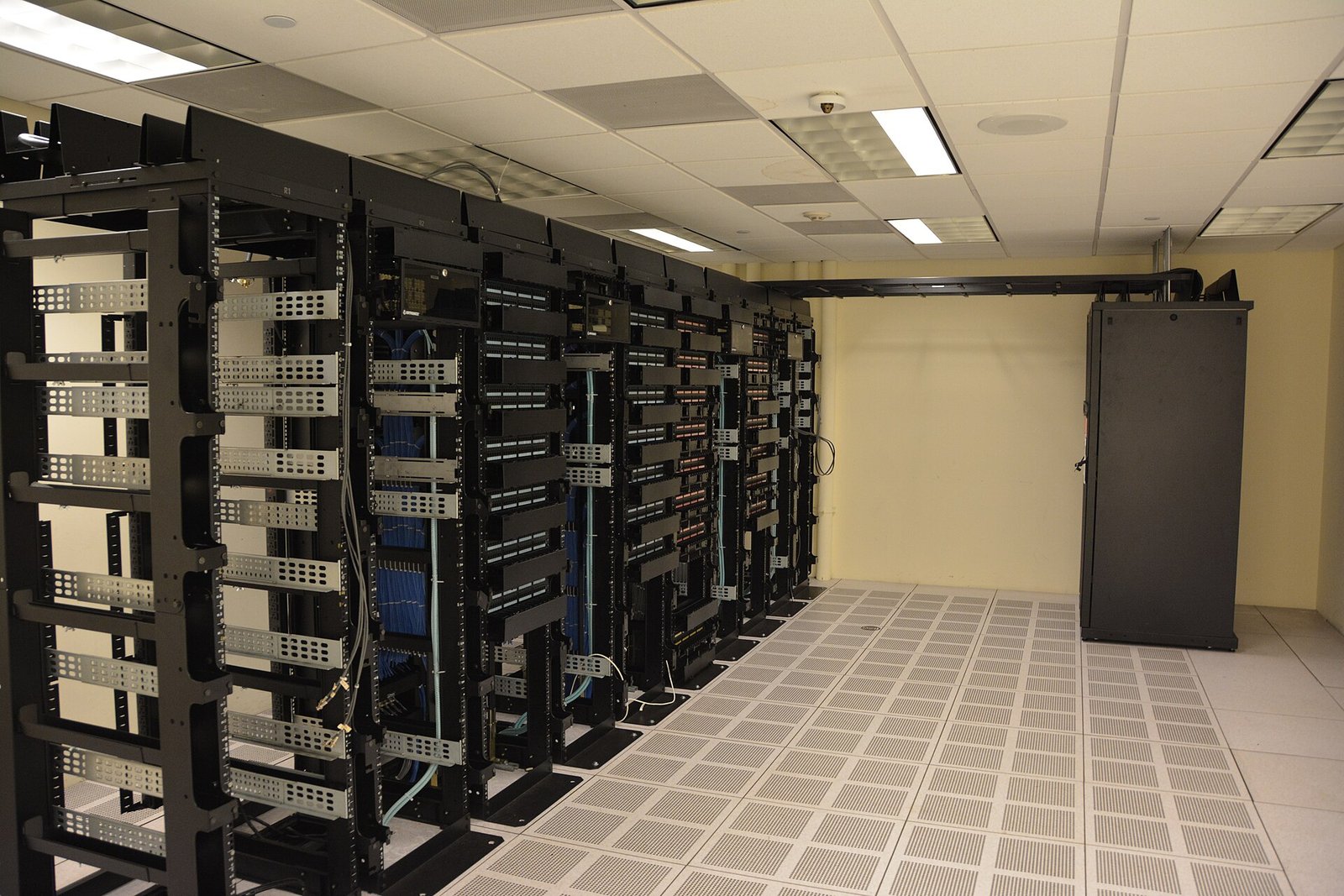
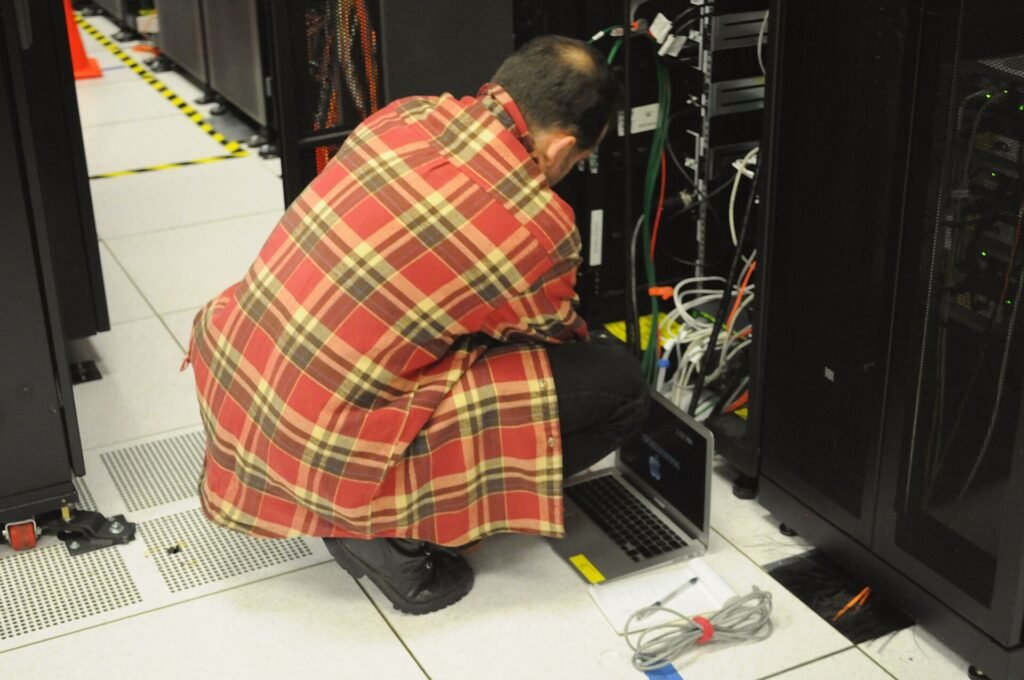
Featured image: Running an open-weight model yourself means renting or owning servers like these. · Photo: Carl Lender / Wikimedia Commons, CC BY 2.0
How this article was made: researched and drafted with AI assistance by the 100xFounder editorial desk, using only the sources listed in it; every figure links to its source. Read our editorial policy, or report an error through our corrections policy.
Related stories
Sources (23)
- Hugging Face / DeepSeek 10 Sep 2026DeepSeek V4.1-Flash MIT licence, 552B params, 8B-16B active, 1M context, release date
- DeepSeek 6 Oct 2026DeepSeek API prices peak/off-peak, peak hours
- DeepSeek 10 Feb 2026Personal data processed and stored in the PRC
- Hugging Face / Qwen 8 Aug 2026Qwen3.8-2.4T-A95B under proprietary Qwen3.8-Max licence
- Hugging Face / Qwen 13 Aug 2026Qwen3.8-27B Apache 2.0, 262K context extendable to 1M
- Hugging Face / Mistral AI 6 Oct 2026Mistral Medium 3.5 Modified MIT licence, $20M monthly revenue restriction
- Hugging Face / Mistral AI 6 Oct 2026Mistral Small 4 119B Apache 2.0
- Meta 6 Oct 2026Llama 4 700M MAU threshold, Built with Llama, Llama name prefix
- Meta 6 Oct 2026EU restriction on multimodal model rights
- TechCrunch 8 Apr 2026Muse Spark debut; Zuckerberg on new open source models
- TechCrunch 10 Aug 2026Muse Glimmer 30B Apache 2.0, on-device agents
- Hugging Face / Meta 6 Oct 2026Glimmer Apache 2.0, quantised builds for 24GB-32GB VRAM
- Hugging Face / OpenAI 6 Oct 2026gpt-oss-120b Apache 2.0, single 80GB GPU
- Hugging Face / Google 6 Oct 2026Gemma 4 31B Apache 2.0
- Hugging Face / Sarvam AI 6 Oct 2026Sarvam-105B Apache 2.0, 22 Indian languages focus
- OpenAI 6 Oct 2026GPT-6 Astra, GPT-6.1 Sol, GPT-6 Luna prices; batch discount
- OpenAI 6 Oct 2026API data not used for training by default, 30-day abuse logs, ZDR by approval, India storage-only residency
- Anthropic 6 Oct 2026Claude Opus 5.5, Sonnet 5.5, Haiku 4.5 prices; 50% batch discount
- Anthropic 6 Oct 2026No training on commercial/API data by default; feedback and opt-in exceptions
- Google 6 Oct 2026Gemini 3.1 Pro Preview and 3.8 Flash prices; free tier used to improve products, paid not
- Together AI 6 Oct 2026gpt-oss-120B, DeepSeek V4.1 Flash, Muse Glimmer prices; H100 $5.49 and B200 $8.99 per GPU-hour
- Hugging Face / Meta Llama 6 Oct 2026Latest Llama checkpoints uploaded April 2025
- Press Information Bureau 12 Mar 2026Bhashini hosts open-sourced Sarvam models on sovereign cloud