The Man Company FY25 and FY26: revenue slips, losses widen at Emami
The Man Company's revenue fell 16% to ₹154 crore in FY25 and its loss widened to ₹32.5 crore in FY26. What drove it, and what Emami says about 2026.
 Ishaan Vardhan16 Oct 2026 · 10 min read

The Man Company, the men’s grooming brand fully owned by Emami since 2024, saw revenue fall 16% to ₹154 crore in FY25 and swung from a ₹9 crore profit to a ₹22 crore loss, according to its filings as reported by Entrackr. FY26 brought only a partial recovery: revenue rose 4.5% to ₹161 crore, but the loss widened by about 49% to ₹32.5 crore.
Below we walk through what drove the numbers, how Emami describes the brand’s recent momentum, and what the story tells founders building digital-first consumer brands in India.
Key takeaways
- FY25 revenue from operations fell to ₹154 crore from ₹183 crore, and the company posted a ₹22 crore loss against a ₹9 crore profit in FY24.
- Advertising spend more than tripled in FY25 to ₹43 crore from ₹14 crore, yet revenue still declined.
- In FY26, revenue grew 4.5% to ₹161.17 crore while the loss rose to ₹32.54 crore and the EBITDA margin worsened to about -16%.
- Emami told investors in August 2026 that The Man Company grew more than 20% in the April–June 2026 quarter, with gross margins above 60%, so FY27 is the year to watch.
The numbers at a glance
A quick guide for readers outside India: one crore is 10 million rupees, and India’s financial year runs April to March, so FY25 means April 2024 to March 2025. “Revenue from operations” is sales from the core business, excluding interest and other income.
| Metric | FY24 | FY25 | FY26 |
|---|---|---|---|
| Revenue from operations | ₹183 crore | ₹154 crore | ₹161.17 crore |
| Total expenses | ₹177 crore | ₹177 crore | ₹194 crore |
| Profit / (loss) | ₹9 crore | (₹22 crore) | (₹32.54 crore) |
| EBITDA margin | 6.78% | -9.74% | -15.91% |
| Spent to earn one rupee of revenue | n/a | ₹1.15 | ₹1.20 |
FY24 and FY25 figures are from Entrackr’s FY25 report (February 2026); FY26 figures are from its FY26 report (July 2026). The FY26 report puts the FY25 loss at ₹21.88 crore and the FY25 EBITDA margin at -9.66%, slightly different from the rounded figures in the earlier report. It also restates some FY25 cost lines on a different basis, so in this article we compare cost lines only within the same report.
What happened in FY25
Revenue fell even as marketing spend tripled
The headline problem in FY25 was that a much bigger marketing budget did not buy growth. Advertising was the company’s largest single expense at ₹43 crore, more than three times the ₹14 crore it spent in FY24, according to Entrackr. Over the same period revenue fell 16%.
Other costs moved too. Discounts rose to ₹18 crore, employee benefit expenses were ₹10.5 crore, the cost of materials was ₹29.3 crore and “other expenses” reached ₹70 crore. Total expenses stayed flat at ₹177 crore, but because revenue shrank by ₹29 crore, the result flipped from a profit to a loss. Products made up 97% of revenue, with shipping charges accounting for the rest.
Why a flat cost base can still sink a P&L
This is the arithmetic that catches many consumer brands. If spending holds steady while sales drop, every fixed rupee of cost is spread over a smaller base. The Man Company spent ₹1.15 to earn each rupee of revenue in FY25, Entrackr calculated. When a brand shifts money towards advertising and discounting without a matching lift in sales, it is effectively paying more to acquire each customer, and that shows up quickly in the margin.
The year-end balance sheet was also thin on cash: cash and bank balances were about ₹0.3 crore against current assets of ₹68 crore, according to Entrackr. For a wholly owned subsidiary, that matters less than it would for a standalone startup, because the parent can fund it.
FY26: modest growth, deeper losses
FY26 (April 2025 to March 2026) brought revenue back to growth, but not enough to cover a rising cost base. Operating revenue rose 4.5% to ₹161.17 crore, while total expenditure climbed 9.6% to ₹194 crore, according to Entrackr.
- Cost of materials consumed rose 12.9% to ₹64.15 crore.
- Other expenses, which typically include marketing, logistics and platform fees, rose 13.6% to ₹101.68 crore.
- Employee costs fell 8.5% to ₹21.24 crore.
- Finance costs rose 26% to ₹4.07 crore.
The loss widened 48.7% to ₹32.54 crore and the EBITDA margin fell to -15.91%. The company spent ₹1.20 for every rupee of revenue. Cash and bank balances improved to ₹4.09 crore, while current assets fell to ₹46 crore.
How Emami got here
Emami, the Kolkata-based maker of Navratna, BoroPlus and Zandu Balm, began investing in Helios Lifestyle, the company behind The Man Company, in 2017. It became the majority shareholder with 50.4% in 2022, and in August 2024 agreed to buy the remaining 49.6% for ₹177.63 crore, according to Business Standard. At the time, Helios reported FY24 turnover of ₹183 crore.
Emami’s vice chairman and managing director Harsha V Agarwal said then that its early strategic investments in new-age startups were meant to “incubate new engines of growth”, Business Standard reported. The Man Company sells beard care, skin and hair care, deodorants and perfumes for men.
The timing is notable. FY25, the year revenue fell, was also the year in which Emami moved to full control. Transitions of that kind often bring changes in strategy, team and channel priorities, though neither Emami nor the brand has publicly linked the FY25 decline to the ownership change.

The latest signal: Emami’s Q1 FY27 commentary
The most recent data point is more positive. In its results for the April–June 2026 quarter, published on 4 August 2026, Emami said its group of strategic investment brands, The Man Company, Brillare, Axiom Ayurveda and IncNut Digital, grew 61% on a like-for-like basis to ₹160 crore and now make up 18% of its domestic business, according to Investing.com’s summary of the investor presentation.
Management said The Man Company grew more than 20% in the quarter and has gross margins above 60%, according to Trade Brains. The brand has pushed customer acquisition through quick-commerce sampling, gifting and a larger retail footprint, and launched lip balms and a beard oil, according to Investing.com.
Emami described the portfolio as roughly EBITDA-neutral in aggregate and said it targets high single-digit EBITDA margins in about three years, according to Investing.com’s earnings call highlights. It expects the portfolio to reach ₹750–800 crore in revenue in FY27. Note that these are portfolio-level comments; Emami does not report The Man Company’s quarterly profit separately.
How peers are doing
The Man Company’s numbers look different against other Indian men’s grooming brands, which have taken sharply different paths.
| Brand (owner) | Latest reported year | Revenue | Profit / (loss) |
|---|---|---|---|
| The Man Company (Emami) | FY26 | ₹161 crore | (₹32.5 crore) |
| Bombay Shaving Company (independent) | FY26 | ₹635 crore | (₹9 crore) |
| Ustraa (VLCC) | FY25 | ₹73 crore | (₹14 crore) |
Bombay Shaving Company grew operating revenue 139% to ₹635 crore in FY26, cut its loss by 85% to ₹9 crore and posted its first positive adjusted EBITDA of ₹2 crore, while raising advertising spend 55% to ₹158 crore, according to Entrackr. VLCC-owned Ustraa went the other way: revenue fell 22% to ₹73 crore in FY25, but losses dropped 72% to ₹14 crore after it cut advertising spend by 60%, Entrackr reported.
The clearest contrast is Marico’s Beardo. Marico said Beardo and plant-based nutrition brand Plix have both turned profitable, with Beardo’s revenue growing about fivefold since its FY21 acquisition, and that its digital-first portfolio exited FY26 at an annualised revenue run rate of about ₹1,100 crore, according to Storyboard18.
What D2C founders can take from this
The following is our analysis of the published figures.
Advertising efficiency matters more than advertising volume
Ustraa and The Man Company in FY25 are almost mirror images. Ustraa cut ad spend hard and accepted lower revenue to shrink losses. The Man Company tripled ad spend and still lost revenue. Bombay Shaving Company raised ad spend and grew far faster. Spend alone explains none of these outcomes; what matters is how much revenue and repeat purchase each rupee of marketing buys. Founders should track contribution margin per channel, not total marketing spend.
A strategic owner buys time, not immunity
Being part of a listed FMCG group gives The Man Company funding, distribution and patience that a standalone brand might not get. It does not change the unit economics. Emami’s target of high single-digit EBITDA margins for its new-age portfolio within about three years shows that even a patient owner sets a deadline.
Gross margin is the cushion
A gross margin above 60%, which is what Emami says The Man Company earns, leaves room to fund marketing and still make money at scale. The FY25 and FY26 losses suggest the issue has been operating costs and acquisition costs, not product margins. That is fixable, but it needs revenue growth to come back without a proportional rise in spend.
Quick commerce and offline retail are now core channels
Both The Man Company and Bombay Shaving Company have leaned into quick commerce, sampling and physical retail. For grooming, where people want to try a fragrance or a face wash before committing, offline presence and fast delivery can lower acquisition costs compared with paid social alone.
Why it matters
India’s first wave of D2C brands is now mostly owned by large consumer companies, and their annual filings are the best public test of whether those acquisitions are working. The Man Company’s FY25 and FY26 results show that a well-known brand with high gross margins can still lose money when growth stalls and costs keep rising. Emami’s comment that the brand grew more than 20% in Q1 FY27 suggests a turn, but the brand’s FY27 annual accounts will show whether that growth came with a smaller loss.
For more on how consumer brands raise money and exit, see our funding tracker and startup news. If you are weighing a role at a D2C company, our in-hand salary calculator helps compare offers.
FAQ
Who owns The Man Company?
Emami Limited owns 100% of Helios Lifestyle, the company behind The Man Company. It first invested in 2017, became majority owner in 2022 and agreed to buy the remaining 49.6% for ₹177.63 crore in August 2024.
What was The Man Company’s revenue in FY25?
Revenue from operations was ₹154 crore in FY25, down 16% from ₹183 crore in FY24, according to Entrackr’s review of its filings.
Is The Man Company profitable?
No. It made a ₹9 crore profit in FY24, then lost ₹22 crore in FY25 and ₹32.54 crore in FY26.
Why did The Man Company’s losses rise?
In FY25, revenue fell while advertising spend more than tripled to ₹43 crore. In FY26, expenses grew 9.6%, faster than the 4.5% revenue growth, with materials and other expenses rising most.
How is The Man Company doing in 2026?
Emami said the brand grew more than 20% in the April–June 2026 quarter, with gross margins above 60%. It does not disclose the brand’s quarterly profit separately.
This article is for information only and is not investment advice. Check company filings or consult a qualified professional before making investment decisions.
Sources
- Entrackr, “The Man Company’s revenue declines to Rs 154 Cr in FY25; slips into losses”, 12 February 2026
- Entrackr, “Emami-owned The Man Company’s losses widen 49% in FY26 amid modest revenue growth”, 3 July 2026
- Business Standard, “Emami to acquire remaining 49.6% stake in The Man Company”, 31 August 2024
- Investing.com, “Emami Q1 FY27 slides: strategic bets drive growth amid margin squeeze”, 4 August 2026
- Investing.com, “Emami Ltd (Q1 2027) earnings call highlights”, 5 August 2026
- Trade Brains, “Emami share: how are its new brands like The Man Company performing”, 13 September 2026
- Entrackr, “Bombay Shaving Company revenue jumps to Rs 635 Cr in FY26, nears break even”, 27 July 2026
- Entrackr, “VLCC-owned Ustraa’s revenue declines to Rs 73 Cr in FY25; losses cut by 72%”, 25 December 2025
- Storyboard18, “Marico’s Beardo, Plix deliver profitability, digital portfolio exits FY26 at Rs 1,100 crore ARR”, 10 July 2026
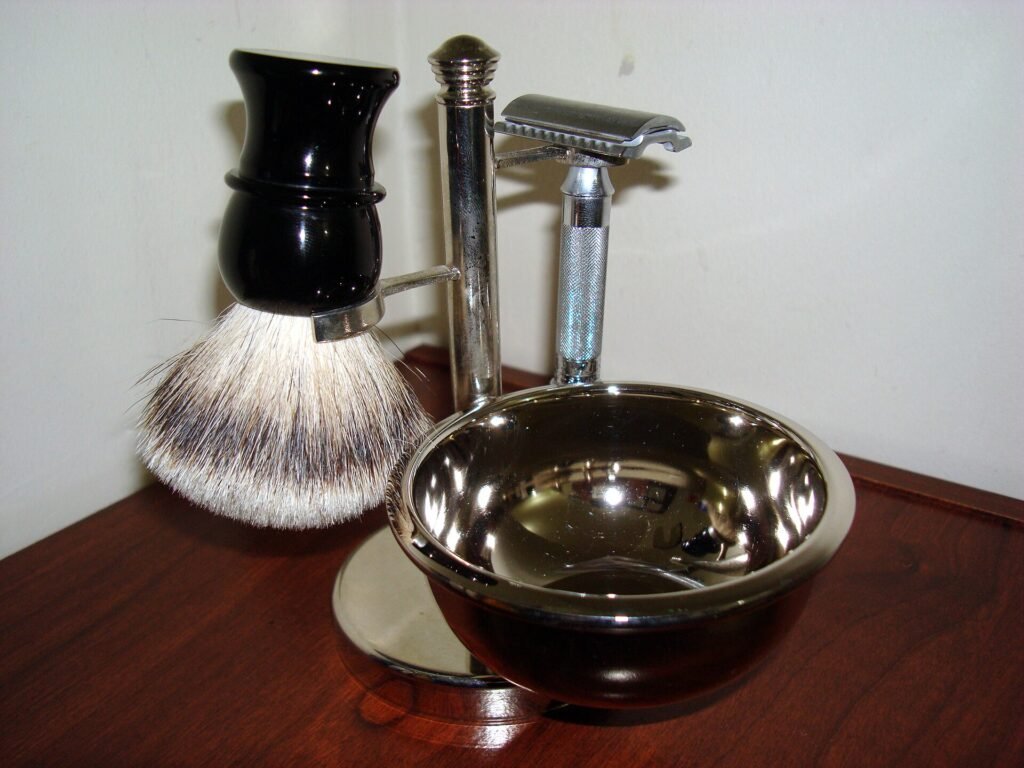
Featured image: Beard care was one of the categories The Man Company built its range around. · Photo: Tools of Men / Wikimedia Commons, CC BY 2.0
How this article was made: researched and drafted with AI assistance by the 100xFounder editorial desk, using only the sources listed in it; every figure links to its source. Read our editorial policy, or report an error through our corrections policy.
Sources (9)
- Entrackr 12 Feb 2026FY25 revenue Rs 154 Cr vs Rs 183 Cr; loss Rs 22 Cr vs profit Rs 9 Cr; ad spend Rs 43 Cr vs Rs 14 Cr; cost lines; EBITDA margin -9.74% vs 6.78%; Rs 1.15 per rupee; cash Rs 0.3 Cr; current assets Rs 68 Cr; 97% product sales
- Entrackr 3 Jul 2026FY26 revenue Rs 161.17 Cr (+4.5%); expenses Rs 194 Cr; loss Rs 32.54 Cr (+48.7%) vs Rs 21.88 Cr; EBITDA -15.91% vs -9.66%; cost lines; cash Rs 4.09 Cr; Emami stake history
- Business Standard 31 Aug 2024Emami to buy remaining 49.6% of Helios Lifestyle for Rs 177.63 Cr; owned 50.4%; FY24 turnover Rs 183 Cr; product range; Harsha Agarwal quote; Emami brands
- Investing.com 4 Aug 2026Strategic investments Rs 160 Cr in Q1 FY27, +61% LFL, 18% of domestic; TMC quick commerce, gifting, retail, new launches
- Investing.com 5 Aug 2026Portfolio EBITDA neutral; high single-digit EBITDA margin target in ~3 years; Rs 750-800 Cr FY27 revenue
- Trade Brains 13 Sep 2026TMC grew more than 20% in Q1 FY27; gross margins above 60%
- Entrackr 27 Jul 2026BSC FY26 revenue Rs 635 Cr (+139%); loss Rs 9 Cr (-85%); adjusted EBITDA Rs 2 Cr; ad spend Rs 158 Cr (+55%)
- Entrackr 25 Dec 2025Ustraa FY25 revenue Rs 73 Cr (-22%); loss Rs 14 Cr (-72%); ad spend down 60%
- Storyboard18 10 Jul 2026Beardo and Plix profitable; Beardo revenue ~5x since FY21; Marico digital portfolio ~Rs 1,100 Cr ARR exiting FY26