Galaxy Connect lead marketplace: how the Indore company sells data
Galaxy Connect sells B2B and B2C contact lists and is building a credit-based lead app. Here is how it works, its pricing and what it says about consent.
 Ishaan Vardhan14 Nov 2026 · 4 min read

Galaxy Connect is an Indore company that sells business and consumer contact lists to Indian sales teams and is building a credit-based app for buying leads one at a time. It also says, unusually plainly, that it does not keep individual consent records for the people in its databases, which is the first thing a buyer should weigh.
What Galaxy Connect sells and who it is for
Galaxy Connect sells B2B and B2C lead databases sorted into more than 30 categories, delivered as spreadsheet files, according to its website. Real estate leads are pitched at brokers and builders, education leads at coaching centres. Category prices on the homepage run from ₹8 a lead for education to ₹12 a lead for real estate, as listed on 12 November 2026.
The business started in 2022, according to Gourav Kumawat, Manager at Galaxy Connect, who answered our questions by email. The contact address on the company’s disclaimer page is in Indore, Madhya Pradesh.
How the lead marketplace app works
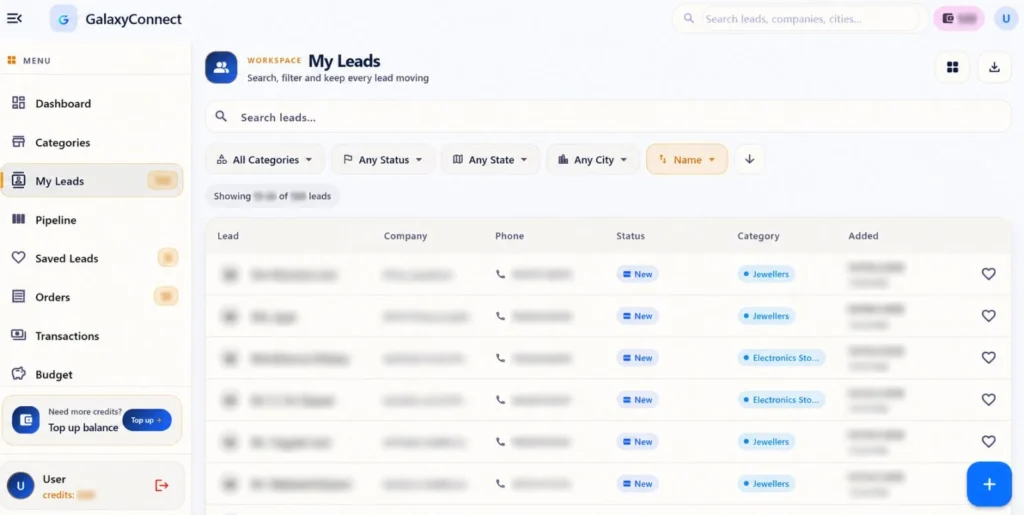
The GalaxyConnect App is a self-service marketplace where a buyer browses lead categories, spends credits to unlock individual leads, and then works them in one place. The software page lists status tags, notes, purchase history and export to Excel, CSV or JSON, and says the app is still in development.
Pricing, as the company describes it
The lead marketplace software costs a one-time ₹5,000, which includes 5,000 credits worth ₹1 each, according to Kumawat. He says a lead costs 2 or 3 credits depending on its category. The public software page does not list package prices: it says the app is free to download, that buyers pay only for credits, and that pricing is shared on WhatsApp.
Where the data comes from, in the company’s words
Galaxy Connect compiles its lists from publicly accessible online sources, Kumawat told us. He named company websites, LinkedIn, business-information sites such as Zauba and Tofler, and company and director records linked to CIN and DIN numbers.
On consent, Kumawat was direct: the company does not currently maintain individual consent records for contacts in its databases, and he asked us not to describe the data as consent-verified or as compliant with GDPR or India’s data protection law. We have not assessed the data’s accuracy or legality. The company’s own disclaimer page says records may not always be accurate or current and that customers are responsible for using the data lawfully.

What buyers of contact data in India should know
Anyone in India who decides how personal data is used is a “Data Fiduciary” under the Digital Personal Data Protection Act, 2023, and that includes a business buying contact lists for sales calls. The government notified the DPDP Rules on 14 November 2025 with an eighteen-month phased compliance period, according to a Press Information Bureau backgrounder dated 17 November 2025. It says every Data Fiduciary must give a separate, plain-language consent notice stating the purpose, and lists penalties of up to ₹250 crore. This is general information, not legal advice; confirm your obligations with a qualified lawyer.
What is next for Galaxy Connect
The near-term job is releasing the GalaxyConnect App. The company has not shared user numbers, revenue or funding, so we have left those out.
FAQ
How much does the GalaxyConnect App cost?
The company says a one-time ₹5,000 fee includes 5,000 credits, with leads costing 2 or 3 credits each. Its software page lists no package prices.
Is Galaxy Connect’s data consent-verified?
No. The company told us it does not keep individual consent records for contacts in its databases.
Does the DPDP Act apply to businesses that buy leads?
A business that decides how it uses personal data is a Data Fiduciary under the DPDP Act, 2023, with consent-notice and security duties, according to the Press Information Bureau.
Sources
- Gourav Kumawat, Manager at Galaxy Connect, emailed answers to 100xFounder, November 2026.
- Galaxy Connect, “Home” (categories and per-lead prices), galaxyconnect.in, accessed 12 November 2026.
- Galaxy Connect, “GalaxyConnect App” (software page), galaxyconnect.in/software, accessed 12 November 2026.
- Galaxy Connect, “Disclaimer”, galaxyconnect.in/disclaimer, accessed 12 November 2026.
- Press Information Bureau, “DPDP Rules, 2025 Notified”, 17 November 2025.
Related stories



Sources (4)
- Galaxy Connect 12 Nov 2026B2B/B2C lead databases, 30+ categories, ₹8–₹12 per lead category prices, side services
- Galaxy Connect 12 Nov 2026App features, platforms, in development, free to download, pay for credits, pricing via WhatsApp
- Galaxy Connect 12 Nov 2026Indore address; no accuracy warranty; customers responsible for lawful use
- Press Information Bureau, Government of India 17 Nov 2025DPDP Rules notified 14 Nov 2025; 18-month phased compliance; consent notice duty; Data Fiduciary definition; penalties