How to use AI for SEO in 2026 without getting penalised by Google
What Google Search Central says about AI content, scaled content abuse and AI Overviews, plus a practical AI-assisted SEO workflow that stays within the rules.
 Ishaan Vardhan6 Oct 2026 · 10 min read
Google does not penalise content because AI helped write it. It penalises content made mainly to manipulate rankings, and its scaled content abuse policy names “using generative AI tools” to produce many pages without adding value. To use AI for SEO safely in 2026, treat it as a research and drafting assistant, keep a person responsible for facts and originality, and publish at the pace your experts can genuinely review.
Key takeaways
- Google’s position has not changed since February 2023: “Appropriate use of AI or automation is not against our guidelines.” What matters is quality and purpose.
- The rule that catches AI content farms is scaled content abuse. Expired domain abuse and site reputation abuse often appear alongside it.
- Google says AI Overviews and AI Mode need no special optimisation, no AI text files and no special schema. Standard SEO and indexable, helpful pages are what count.
- AI answers reduce clicks. Pew found users clicked a result in 8% of visits when an AI summary appeared, against 15% when one did not. Measure conversions, not only sessions.
- Google’s generative AI guidance asks for manual fact-checking of everything, including titles, meta descriptions, structured data and alt text.
What Google actually says about AI-generated content
The baseline is Google’s February 2023 post, “Google Search’s guidance about AI-generated content”. Its main heading reads “Rewarding high-quality content, however it is produced.” The post says using automation, including AI, “with the primary purpose of manipulating ranking in search results” breaks the spam policies, but that not all automation is spam, citing sports scores, weather forecasts and transcripts as examples. In its FAQ, Google says AI use gives content no special advantage, recommends accurate author bylines where readers would expect them, and says listing AI as the author is probably not the best way to be transparent.
Google’s helpful content guidance, last updated on 1 October 2026, turns this into three questions: Who created the content, How it was made and Why. Google calls “Why” perhaps the most important. If you mainly create content to attract search visits, that is “not aligned” with what Google’s systems reward. If you use AI to produce content mainly to manipulate rankings, that is a spam violation. The page also asks a pointed question: “Are you using extensive automation to produce content on many topics?”
The spam policies that catch AI-heavy sites
Google’s spam policies (last updated 28 August 2026) define scaled content abuse as generating many pages “for the primary purpose of manipulating search rankings and not helping users”, “no matter how it’s created”. The listed examples include:
- using generative AI tools or similar tools to generate many pages without adding value for users;
- scraping feeds or search results and rewriting them through synonyms, translation or other obfuscation;
- stitching together content from other pages without adding value;
- creating multiple sites to hide how much content is being mass-produced.
Two related policies often apply to AI-driven projects. Expired domain abuse means buying a lapsed domain to host low-value content that borrows its old reputation. Site reputation abuse means placing third-party content on an established site mainly to exploit that site’s ranking signals.
These policies have been enforced at scale before. When Google introduced them alongside the March 2024 core update, it said site reputation abuse enforcement would start on 5 May 2024. Google had expected the combined changes to cut low-quality, unoriginal content in results by 40%. In an update on 26 April 2024, the Google Keyword blog said the reduction reached 45%.

Google’s rules for publishing generative AI content
Google’s page on using generative AI content on your website (last updated 1 October 2026) is the most practical document on this subject. Its main points:
- AI is useful for research and structure. Google says generative AI “can be particularly useful when researching a topic, and to add structure to original content”.
- Fact-check everything. Models “predict a likely sequence of words” and can hallucinate. Google says it is “critical to manually factcheck and review all AI-generated content”. That includes title elements, meta descriptions, structured data and image alt text.
- Give readers context. Where readers would reasonably ask how something was made, explain how automation was used.
- Ecommerce has hard requirements. Under Merchant Center policies, AI-generated images must carry IPTC DigitalSourceType TrainedAlgorithmicMedia metadata. AI-generated product titles and descriptions must be specified separately and labelled as AI-generated.
The page also points to sections 4.6.5 and 4.6.6 of Google’s Search Quality Rater Guidelines. They describe how raters judge scaled content abuse and content made with “little to no effort, little to no originality, and little to no added value”. Rater scores do not directly change rankings, but they show what Google’s systems are being tuned to recognise.
AI Overviews and AI Mode: what changes for traffic
The search results page itself has changed. At Alphabet’s investor presentation on 3 June 2026, Sundar Pichai said AI Overviews have more than 2.5 billion monthly users and that AI Mode has passed 1 billion monthly users a year after launch. In July 2025 the figures were 2 billion and 100 million respectively, according to TechCrunch.
Independent data shows what this does to clicks. Pew Research Center analysed the browsing of 900 US adults in March 2025. It found that 18% of Google searches produced an AI summary, and that users clicked a traditional result in 8% of visits to pages with a summary against 15% on pages without one. They clicked a link inside the summary in just 1% of visits. Longer queries triggered summaries far more often: 53% of searches with ten or more words did, against 8% of one- or two-word searches.
Google’s “AI features and your website” documentation sets out the official position:
- “There are no additional requirements to appear in AI Overviews or AI Mode.” A page needs to be indexed and eligible to show a snippet.
- Both features may use “query fan-out”, running related searches across subtopics, so a page can be cited for questions it does not target directly.
- “You don’t need to create new machine readable files, AI text files, or markup” to appear, and no special schema.org markup is required.
- Traffic from these features appears in Search Console’s Performance report under the “Web” search type.
- To limit what appears, use nosnippet, data-nosnippet, max-snippet or noindex. Google-Extended controls training and grounding in some of Google’s other systems.
In a May 2025 post, Google said clicks from results pages with AI Overviews are “higher quality”, meaning visitors spend more time on the site. It advised publishers to focus on “unique, non-commodity content” and to measure “the full value” of visits rather than raw clicks. This is Google’s own claim. Pew’s data on click rates is the independent check.

A practical AI-assisted SEO workflow
This workflow follows Google’s published guidance. Use AI where it saves time and keep people where judgement matters.
- Start from real demand. Export queries from Search Console and use an AI assistant to cluster them by intent. Check the clusters against the live results page before you commit, because AI clustering can merge different intents.
- Write the brief yourself, then ask AI to find gaps. The brief should state what you know that others do not: first-hand testing, your own data, customer conversations. That is the “non-commodity” element Google keeps asking for.
- Draft with AI, rewrite with expertise. Use the model for structure and a first pass on explanatory sections. A subject expert should add examples, numbers and opinions, and remove generic filler.
- Fact-check line by line. Every figure, date and quote needs a source that a person has opened. Google’s guidance applies this to metadata and alt text as well.
- Disclose where readers would ask. Use a short note on how the piece was produced and a real author byline. Do not list AI as the author.
- Keep structured data honest. Mark up only what is visible on the page, and validate it.
- Publish at a human pace. If your output grows faster than your reviewers can read, you are moving towards the scaled content abuse examples above.
- Measure value. Track sign-ups, leads or sales by landing page alongside clicks, because AI summaries will reduce some informational traffic regardless of quality.

What to avoid
| Practice | Why it is risky |
|---|---|
| Publishing hundreds of AI pages targeting keyword variations | Matches Google’s first listed example of scaled content abuse |
| Rewriting or translating competitors’ articles with AI | Listed as scraping with “automated transformations” |
| Hosting AI affiliate content on a bought expired domain | Expired domain abuse |
| Letting a partner place AI content on your authoritative site | Can be site reputation abuse if the aim is to exploit your rankings |
| Unreviewed AI meta descriptions and alt text | Google says these need manual fact-checking too |
| Creating llms.txt or “AI schema” just for AI Overviews | Google says neither is needed for its AI features |
A note on SEO vendors: no tool can guarantee rankings or AI Overview citations, and Google says even compliant pages are not guaranteed to be indexed or shown. Be wary of any service that promises either.

Bottom line
The penalty risk with AI comes from scale without value, not from the technology itself. Sites that use AI to research faster, structure better and then add real experience will do well under Google’s current rules. Sites that use it to multiply pages will eventually be caught, either by the spam systems or by AI Overviews answering the question before anyone clicks. For startups, the safest content strategy is also the one that converts: publish fewer pages built on original data or first-hand experience. Follow our AI news coverage for search updates as they land, and browse recent launches for new AI SEO tools.
FAQ
Does Google penalise AI-generated content?
Not for being AI-generated. Google says appropriate AI use is not against its guidelines. Content made mainly to manipulate rankings, or mass-produced without adding value, violates its spam policies however it was produced.
Do I need to disclose that I used AI?
Google recommends disclosure where readers would reasonably wonder how content was made. Ecommerce sites must label AI-generated product data and add IPTC metadata to AI-generated images under Merchant Center rules.
How do I get cited in AI Overviews?
Google says there are no extra requirements. The page must be indexed and eligible for a snippet, and the usual practices apply: crawlable pages, helpful content, good page experience and structured data that matches visible content.
Should I add an llms.txt file for Google?
Google’s documentation says you don’t need new machine-readable or AI text files to appear in its AI features. Other AI companies may treat such files differently.
Can I stop my content appearing in AI Overviews?
You can limit it with nosnippet, data-nosnippet, max-snippet or noindex. These controls also affect how your pages appear in regular search results.
Sources
- Google Search Central, “Google Search’s guidance about AI-generated content”, 8 February 2023
- Google Search Central, “Creating helpful, reliable, people-first content”, updated 1 October 2026
- Google Search Central, “Spam policies for Google web search”, updated 28 August 2026
- Google Search Central, “Google Search’s guidance on using generative AI content on your website”, updated 1 October 2026
- Google Search Central, “AI features and your website”, updated 10 December 2025
- Google Search Central Blog, “Top ways to ensure your content performs well in Google’s AI experiences on Search”, 21 May 2025
- Google Search Central Blog, “What web creators should know about our March 2024 core update and new spam policies”, 5 March 2024
- Google (The Keyword), “New ways we’re tackling spammy, low-quality content on Search”, 5 March 2024, updated 26 April 2024
- Pew Research Center, “Google users are less likely to click on links when an AI summary appears in the results”, 22 July 2025
- Google (The Keyword), “Alphabet investor presentation: June 2026”, 3 June 2026
- TechCrunch, “Google’s AI Overviews have 2B monthly users, AI Mode 100M in the US and India”, 23 July 2025
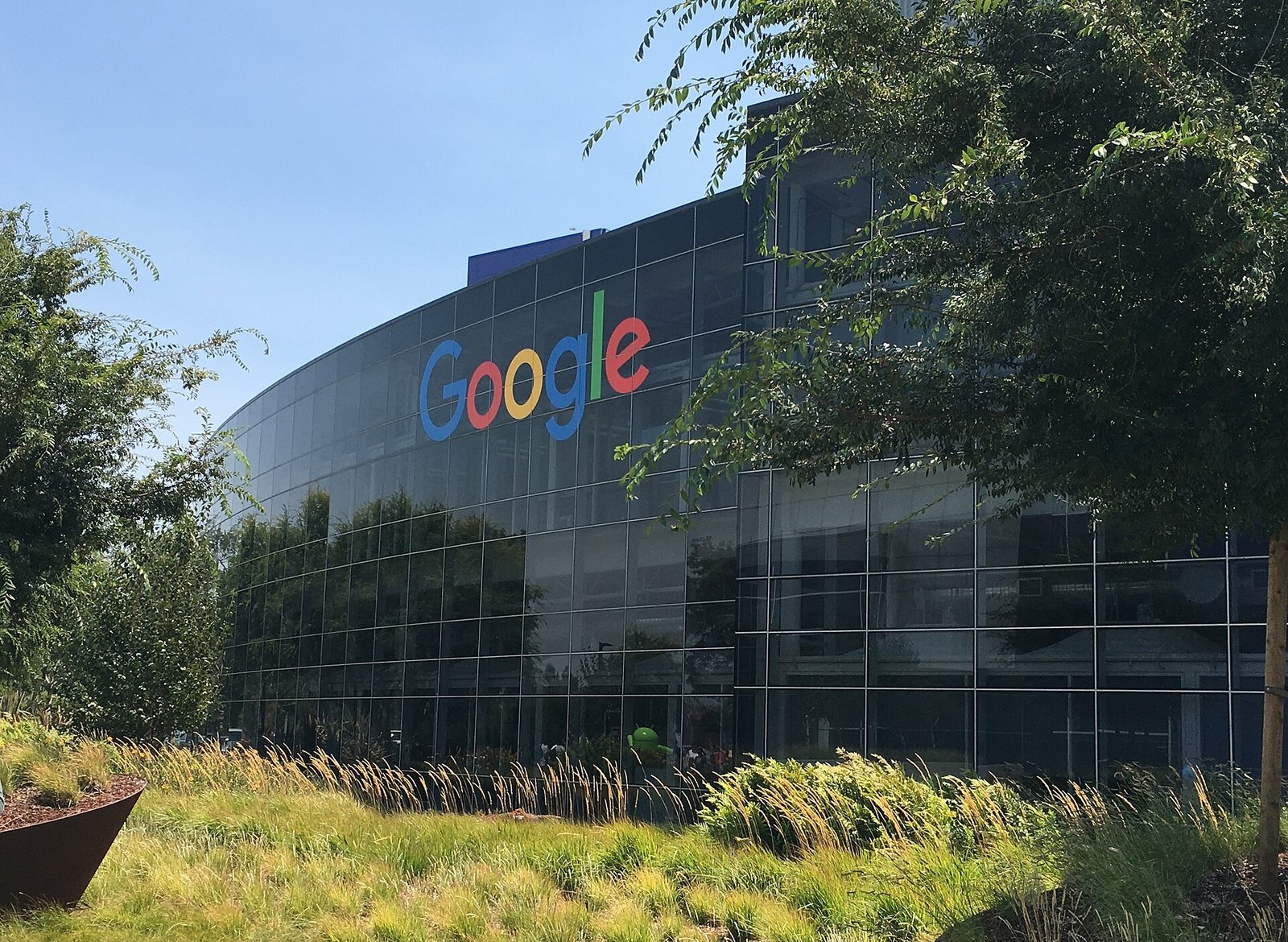
Featured image: Google's Search Central documentation sets the rules for AI-assisted content. · Photo: Asoundd / Wikimedia Commons, CC BY-SA 4.0
Related stories



Sources
- Google Search Central 8 Feb 2023AI content guidance; appropriate use not against guidelines; bylines; AI as author
- Google Search Central 1 Oct 2026Who/How/Why; automation question; 'Why' most important
- Google Search Central 28 Aug 2026Scaled content abuse definition and examples; expired domain and site reputation abuse
- Google Search Central 1 Oct 2026Fact-check AI content incl. metadata; IPTC TrainedAlgorithmicMedia; rater guideline sections 4.6.5/4.6.6
- Google Search Central 10 Dec 2025No extra requirements for AI Overviews/AI Mode; query fan-out; no AI text files; Search Console reporting; preview controls
- Google Search Central Blog 21 May 2025Non-commodity content; higher quality clicks; measure full value of visits
- Google Search Central Blog 5 Mar 2024New spam policies; site reputation abuse from 5 May 2024
- Google 26 Apr 2024Expected 40% reduction; achieved 45% less low-quality unoriginal content
- Pew Research Center 22 Jul 2025900 US adults; 18% of searches had AI summary; 8% vs 15% click rate; 1% clicked summary links; query length stats
- Google 3 Jun 2026AI Overviews 2.5B+ monthly users; AI Mode 1B+ monthly users
- TechCrunch 23 Jul 2025July 2025: AI Overviews 2B monthly users; AI Mode 100M