IndiaAI Mission 2026: GPU compute, foundation models and how to apply
How startups can use the ₹10,372 crore IndiaAI Mission in 2026: ₹65-an-hour GPUs, AIKosh datasets, the 12 foundation model picks and how to apply.
 Lovish Madaan18 Oct 2026 · 11 min read
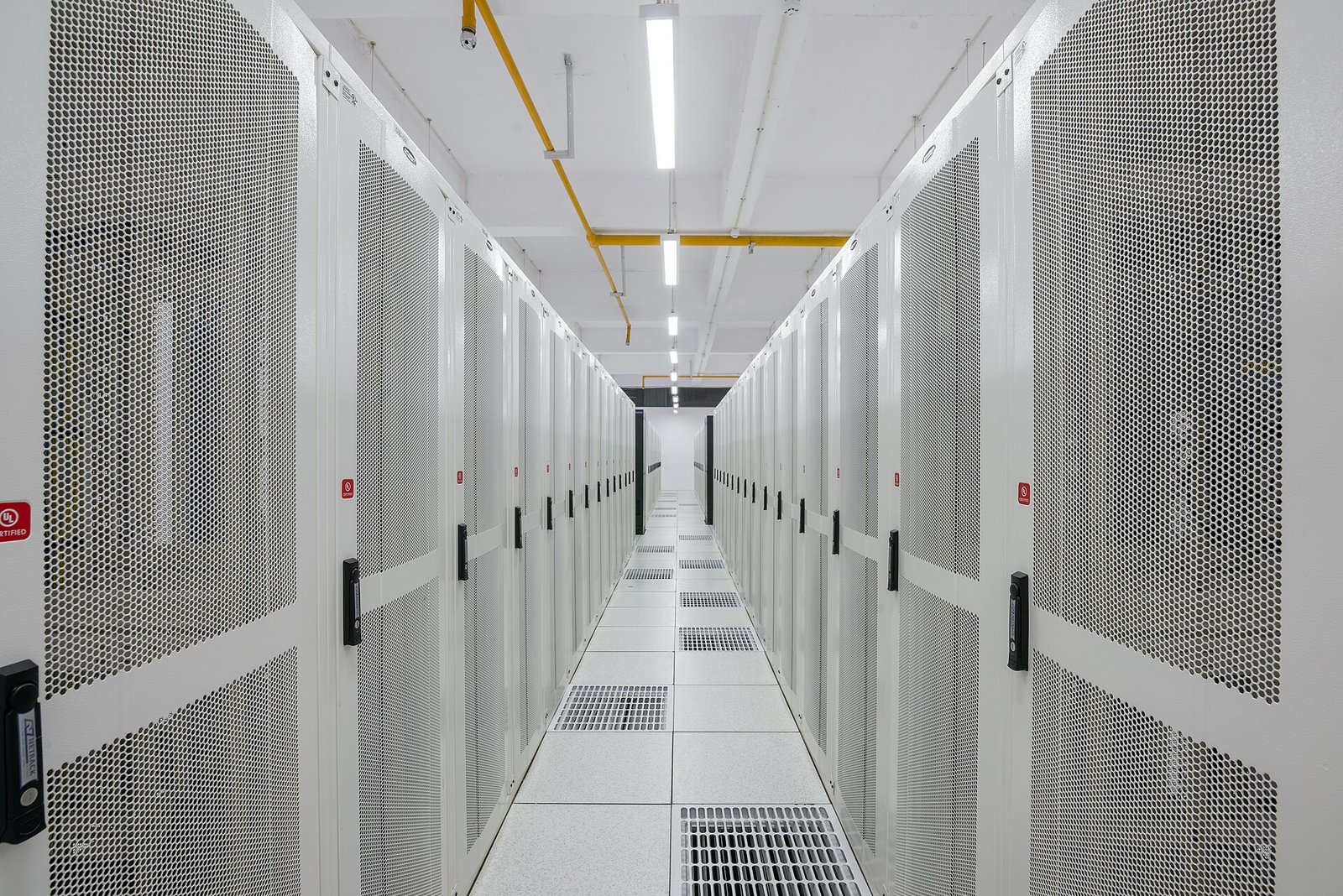
The IndiaAI Mission is the Indian government’s ₹10,371.92 crore programme (one crore is 10 million rupees) for building the country’s AI capacity, and for a startup it comes down to three practical things: subsidised GPU time, free datasets and models, and a handful of funded programmes you can apply to. As of February 2026 the government says more than 38,000 GPUs are available through its compute portal at ₹65 an hour, according to the Press Information Bureau. This guide explains what exists in October 2026, who qualifies and how the application cycle actually works.
The timing matters this month. The compute portal takes requests only between the 1st and the 25th of each month, and larger requests are decided in a list published on the 10th of the following month, according to the IndiaAI Compute Portal. A request filed by 25 October is therefore decided around 10 November.
Key takeaways
- The mission was approved in March 2024 with an outlay of ₹10,371.92 crore over five years, according to the PIB.
- Over 38,000 GPUs and 1,050 TPUs have been onboarded; GPUs are offered at ₹65 an hour, which the government describes as about a third of the global average.
- Startups need DPIIT recognition plus either ₹50 lakh in annual revenue or ₹1 crore in funding to register on the compute portal; a separate track exists for early-stage founders.
- Twelve organisations, including Sarvam AI, BharatGen and Tech Mahindra, were picked to build Indian foundation models from more than 500 proposals.
- AIKosh, the national dataset platform, listed 7,541 datasets and 273 models as of February 2026, free to browse after sign-up.
What the IndiaAI Mission is and what it pays for
The Union Cabinet approved the mission in March 2024, with ₹10,371.92 crore spread over five years, according to a February 2026 PIB backgrounder titled “Democratising AI in India”. It is run by MeitY, the Ministry of Electronics and Information Technology, through a division called IndiaAI. The money is aimed at the building blocks that are expensive for a young company to buy alone: computing power, training data, home-grown foundation models, talent, and help for startups to grow.
For a founder, it helps to separate the parts you can use directly from the parts that mostly fund other people. You can use the compute portal and AIKosh yourself, and you can apply to startup programmes such as IndiaAI Startups Global. The foundation model track is a selective, competitive grant for teams that want to train large models from scratch; most startups will instead use the models those teams publish.
Subsidised GPU compute: what is on offer
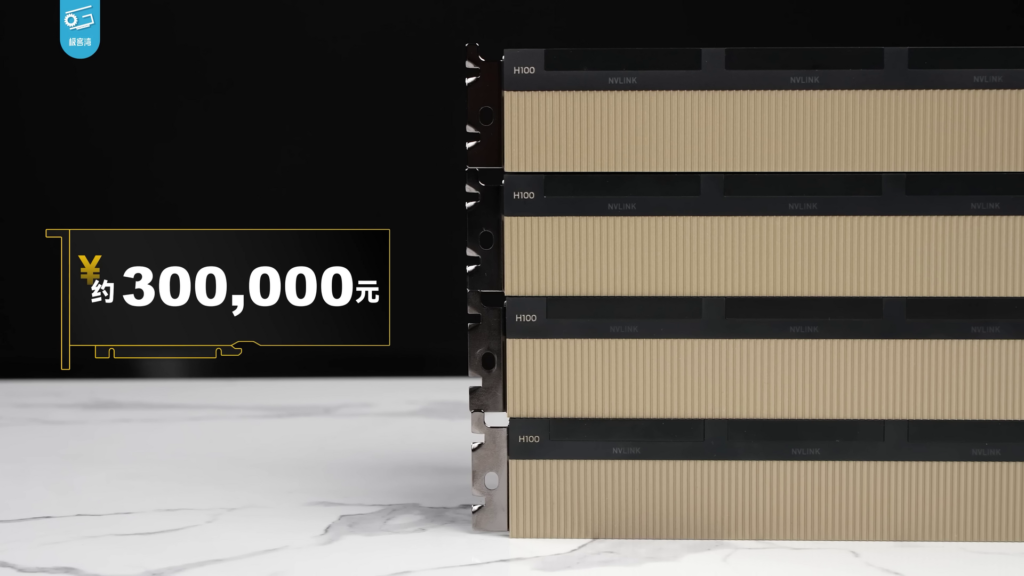
Compute is the part most startups care about. Under the mission, more than 38,000 high-end GPUs have been onboarded and are available at ₹65 per hour, the PIB said on 10 February 2026, adding that 1,050 TPUs (Google’s AI-specific chips) have also been brought in. The government frames ₹65 an hour as nearly one third of the global average cost.
The GPUs are not in one government data centre. They sit with private cloud providers that won tenders to supply the pool. When Sarvam AI was selected in April 2025, Inc42 reported that Yotta Data Services, E2E Networks and NxtGen Cloud Technologies had been given GPU supply contracts offering access at under $1 an hour. The portal itself now shows a wider set of empanelled providers on its home page.
The pool has grown in steps. In May 2025, national compute capacity passed 34,000 GPUs, according to Inc42, and the February 2026 PIB figure was above 38,000. The rate a given project pays still depends on the GPU type, the length of the booking and whether a subsidy is approved, so use the portal’s own price calculator rather than a headline number when you budget.
Who can apply for IndiaAI compute
The compute portal lists separate eligibility rules for each type of user. The ones relevant to founders and their teams, as shown on the portal on 15 October 2026:
| User type | What the portal asks for |
|---|---|
| Startups and MSMEs | DPIIT recognition, AI/ML experience, and either annual revenue of ₹50 lakh or funding of ₹1 crore (₹100 lakh) |
| Early-stage startups | Four years of AI/ML experience (research counts) and a letter from the IndiaAI CEO or an officer of Joint Secretary rank or above |
| Researchers and academics | An h-index of 5 or more, publications in AI/ML journals with an impact factor above 2.5, or 150+ citations |
| Early-stage researchers | An AI/ML researcher profile and relevant experience |
| Students | AI/ML projects and a matching academic profile |
| IndiaAI Fellowship awardees | Selection for the fellowship |
| Government entities | A letter from a director, MD, GM or other authorised officer |
DPIIT recognition is the free “Startup India” certificate issued by the Department for Promotion of Industry and Internal Trade; if you do not have it, get it before you start. A lakh is 100,000 rupees, so the revenue bar is ₹5 million a year and the funding bar ₹10 million. Pre-revenue, pre-seed teams that miss both numbers have to use the early-stage route, which depends on getting a supporting letter from the mission itself.
How to apply for compute, step by step
The process below follows the portal’s published workflow. Check the portal before filing, because the forms change.
- Sign in with a government ID. The portal uses single sign-on through DigiLocker, e-Pramaan or Jan Parichay (also called Meri Pehchaan). Use the founder’s or an authorised signatory’s account.
- Complete end-user registration. Fill in the organisation’s details and upload the documents for your category, for a startup typically the DPIIT certificate and proof of revenue or funding.
- Wait for verification. Officials check the submission before you can request compute.
- Submit a compute request. This includes a project proposal covering your technical approach, the expected impact and an estimated bill of materials, plus a draft bill built from the portal’s rate list. You can ask for a subsidy in the same request.
- Get approved. Requests under 5,000 GPU hours are approved automatically. Larger ones go to a review committee (the PMEC), which publishes the approved list on the 10th of the following month, or the next working day.
- Use the approval within 30 days. Approvals are valid for 30 calendar days, so have your provider account, data and training code ready before you apply.
Two practical points follow from these rules. First, 5,000 GPU hours is roughly one GPU running non-stop for about seven months, or 64 GPUs for about three days, so many fine-tuning and inference projects can stay under the automatic threshold. Second, the portal says the subsidy covers approved projects only and users pay anything beyond it, so a large request should still make sense at full price.
Foundation models: who was selected and what they built
The most visible part of the mission is the effort to build Indian foundation models, meaning large general-purpose AI models trained from scratch on Indian data and languages. More than 500 proposals came in and 12 organisations were selected across the first two phases, according to the PIB.
Phase one (April–May 2025)
Bengaluru-based Sarvam AI was the first pick. Inc42 reported on 26 April 2025 that it would build a sovereign model focused on reasoning and voice across Indian languages, designed and run in India. A month later, three more were added: Soket AI Labs (a 120-billion-parameter open-source model), Gnani.ai (a 14-billion-parameter voice model) and Gan.ai (a 70-billion-parameter multilingual model), according to Inc42, which said 506 applications had arrived by 30 April 2025.
Phase two (September 2025)
On 18 September 2025, eight more were named: Tech Mahindra, Fractal Analytics, Avataar AI, Zeinteiq Aitech Innovations, Genloop Intelligence, NeuroDX (Intellihealth), Shodh AI and IIT Bombay’s BharatGen consortium, Inc42 reported. BharatGen, which is working towards a trillion-parameter model, is backed by ₹988.6 crore from the mission, according to the same report.
What has shipped
Sarvam unveiled 30-billion and 105-billion-parameter models at the India–AI Impact Summit in New Delhi in February 2026, along with speech-to-text, text-to-speech and document-reading vision models, TechCrunch reported on 18 February. The company said the models were trained on compute from the IndiaAI Mission, with infrastructure from Yotta and technical support from Nvidia. The 30B model has a 32,000-token context window and the 105B model 128,000 tokens.
The weights were later released under the Apache 2.0 licence, which allows commercial use, and are available on Hugging Face and on AIKosh, according to Artificial Analysis. Its independent Intelligence Index scored Sarvam 105B at 18 and Sarvam 30B at 12 in reasoning mode. If you want to work on these models rather than just use them, Sarvam’s open roles are on our Sarvam AI jobs page.
For a startup, the real value of this track is not the grant itself, which goes to a small number of teams, but the open models it produces. A product that needs Hindi, Tamil or Bengali voice or text can start from these weights instead of paying per call for a foreign API, and can host them on IndiaAI compute.
AIKosh: free datasets and models
AIKosh is the mission’s national platform for AI datasets and models, pulling together data from government and non-government sources. As of February 2026 it listed 7,541 datasets and 273 AI models across 20 sectors, the PIB said, and by December 2025 it had logged more than 3.85 lakh (385,000) visits, 11,000 registered users and 26,000 downloads.
For founders, AIKosh is most useful as a first stop before you scrape or buy data. Government datasets on agriculture, health, weather and languages are hard to find elsewhere in clean form. Check each dataset’s licence before you train a commercial model on it: India’s open-data licence covers non-sensitive public data, but not every dataset on the platform is published on the same terms. The same PIB note points out that personal data remains covered by the Digital Personal Data Protection Act 2023.
Startup programmes you can apply to
IndiaAI Startups Global (Station F and HEC Paris)
The clearest open programme for startups is IndiaAI Startups Global, run with Station F in Paris and HEC Paris. The IndiaAI page for the 2026 second cohort, published on 15 June 2026, describes a four-month programme for 10 Indian AI startups: a three-week online phase on European market entry, then three months at Station F with office space, investor meetings and legal workshops on EU entry. On top of the programme fee, each selected startup gets up to ₹5 lakh in prize money from the mission.
The dates for this cohort, according to the same page:
- Applications opened: 15 June 2026
- Deadline: 28 June 2026
- Programme start: 1 September 2026 (tentative)
- Paris phase begins: 15 December 2026 (tentative)
The 2026 window has closed. The application period was only two weeks, so founders aiming for a later cohort should watch the IndiaAI site and have a short deck on European expansion ready. The listed contact for questions is gm-startups@indiaai.gov.in.
Talent: fellowships and data labs
The mission also funds people. It supports 500 PhD scholars, 5,000 postgraduate students and 8,000 undergraduates through fellowships, the PIB said; by July 2025 more than 200 students had received fellowships and 73 institutes had onboarded PhD candidates. Fellowship holders get their own eligibility track on the compute portal, which matters if you hire or collaborate with them. Thirty-one data and AI labs have been set up with NIELIT and industry partners in smaller cities, and states have nominated 174 ITIs and polytechnics for more. If you are hiring for these skills, our AI and ML jobs board tracks openings from official careers pages.
Why it matters for Indian AI startups
The mission lowers three costs that used to push Indian AI startups abroad: GPU time, Indian-language data and base models. At ₹65 an hour, the government says its compute costs about a third of the global average, and open models such as Sarvam’s mean a startup no longer has to train from scratch to get Indian-language capability.
The limits are just as real. The registration bar of ₹50 lakh in revenue or ₹1 crore in funding leaves out many pre-seed teams, which then depend on a supporting letter. Approvals expire in 30 days, and large requests are decided only once a month. The best fit today is a funded startup with a clear, time-boxed training or fine-tuning job that can be ready to run as soon as approval arrives. Policy and figures change, so confirm eligibility, rates and dates on the official portals before you commit money. For the latest on the mission and Indian AI startups, follow our news section.
FAQ
How much money does the IndiaAI Mission have?
₹10,371.92 crore over five years, approved in March 2024, according to the PIB.
What does IndiaAI GPU compute cost?
The government says GPUs are available at ₹65 an hour. Actual rates vary by GPU and booking, so use the price calculator on compute.indiaai.gov.in.
Can a pre-revenue startup get IndiaAI compute?
Not through the standard startup route, which needs ₹50 lakh revenue or ₹1 crore funding. The early-stage route needs four years of AI/ML experience and a letter from the IndiaAI CEO or a Joint Secretary-level officer.
When are compute requests decided?
Requests filed between the 1st and 25th are reviewed monthly; requests under 5,000 GPU hours are approved automatically, and larger ones are listed on the 10th of the next month.
Which companies are building IndiaAI foundation models?
Sarvam AI, Soket AI, Gnani.ai and Gan.ai in phase one, and Tech Mahindra, Fractal, Avataar AI, Zeinteiq, Genloop, NeuroDX (Intellihealth), Shodh AI and IIT Bombay’s BharatGen in phase two.
Is AIKosh free?
AIKosh is a public platform for browsing and downloading datasets and models after sign-up, but each dataset carries its own licence terms, so check them before commercial use.
Sources
- Press Information Bureau, “Democratising AI in India”, 2026-02-10
- IndiaAI Compute Portal, “Eligibility, onboarding and FAQs”, accessed 2026-10-15
- IndiaAI, “IndiaAI Startups Global: International Acceleration Programs for Indian AI Startups – 2026 2nd Cohort”, 2026-06-15
- IndiaAI, “AIKosh”, accessed 2026-10-15
- Inc42, “Sarvam To Build India’s First Homegrown Sovereign AI Model”, 2025-04-26
- Inc42, “IndiaAI Mission: Soket AI, Gnani.ai & Gan.ai To Develop Indigenous AI Models”, 2025-05-31
- Inc42, “IndiaAI Mission: Fractal, Tech Mahindra Among 8 New Players Picked To Build LLMs”, 2025-09-18
- TechCrunch, “Indian AI lab Sarvam’s new models are a major bet on the viability of open source AI”, 2026-02-18
- Artificial Analysis, “Sarvam 105B and Sarvam 30B: everything you need to know”, 2026-04-02
Sources (9)
- Press Information Bureau 10 Feb 2026₹10,371.92 crore outlay over five years approved March 2024; 38,000+ GPUs at ₹65/hour (~1/3 global average); 1,050 TPUs; AIKosh 7,541 datasets, 273 models, 20 sectors, 3.85 lakh visits, 11,000 users, 26,000 downloads; 500+ proposals, 12 selected; fellowships 500/5,000/8,000, 200+ by July 2025, 73 institutes; 31 labs, 174 ITIs; summit 16-20 Feb 2026 at Bharat Mandapam; DPDP Act
- IndiaAI Compute Portal 15 Oct 2026Eligibility by user type (DPIIT, ₹50 lakh revenue or ₹100 lakh funding; early-stage 4 years + letter); login via DigiLocker/e-Pramaan/Jan Parichay; steps; 1st-25th window; <5,000 GPU hours auto-approved; PMEC list on 10th; 30-day validity; users bear cost beyond subsidy
- IndiaAI 15 Jun 2026Startups Global 2nd cohort: Station F & HEC Paris, 4 months, 10 startups, up to ₹5 lakh prize money, 3-week online + 3 months onsite, dates 15 Jun/28 Jun/1 Sep/15 Dec 2026, contact email
- IndiaAI 15 Oct 2026AIKosh platform
- Inc42 26 Apr 2025Sarvam selected for sovereign model; Yotta, E2E Networks, NxtGen GPU supply contracts under $1/hour
- Inc42 31 May 2025Soket 120B, Gnani 14B voice, Gan 70B; 506 applications by 30 April 2025; 34,000+ GPUs
- Inc42 18 Sep 2025Eight phase-two selections; BharatGen trillion-parameter model backed by ₹988.6 crore
- TechCrunch 18 Feb 2026Sarvam 30B and 105B launch, speech and vision models, 32k/128k context, trained on IndiaAI compute with Yotta and Nvidia
- Artificial Analysis 2 Apr 2026Sarvam weights under Apache 2.0 on Hugging Face and AIKosh; Intelligence Index 18 and 12