How to Get a Job at OpenAI in 2026: Interview Process, Roles and Tips
OpenAI's official four-stage interview process, what it looks for, where it's hiring in India and abroad, plus its hybrid, Residency and early-career routes.
 Ishaan Vardhan7 Oct 2026 · 10 min read · Updated 12 Oct 2026

To get a job at OpenAI in 2026, apply to a specific role on its careers site and prepare for a four-stage process: résumé review, introductory calls, a skills assessment, and four to six hours of final interviews. OpenAI’s own interview guide says each step usually comes with a reply within about a week. The company says it is not credential-driven. It hires both established experts and “high potential” people who can learn a new field fast. Most roles are in San Francisco, and a small team is now hiring in Delhi, Mumbai and Bangalore.
100Xfounder is an independent site. This guide is not official, and we are not affiliated with or endorsed by OpenAI. Always check details with the official careers site and your recruiter.
Key takeaways
- OpenAI listed 828 open roles on its official job board on 4 October 2026, and 571 of them were in San Francisco. Ten were in India, all in sales, marketing or applied AI.
- The official process has four stages. Final interviews typically take four to six hours, with four to six people, over one or two days, and are held virtually by default.
- Whether you can use AI tools depends on the interview. OpenAI explains the rules in your prep materials.
- Most postings describe a hybrid model of three days a week in the office, with relocation help.
- Early-career routes include roles for people with zero to three years of experience, internships and the six-month Residency. Applications for the 2026 Residency are closed.
Where OpenAI is hiring right now
We checked OpenAI’s public Ashby job board on 4 October 2026, which is the feed behind its careers site. It listed 828 openings. The biggest departments were Go To Market (147), Scaling (118), Applied AI (109), Research (65) and User Operations (61), followed by Marketing, Finance, Consumer Devices, Forward Deployed Engineering and Security.
San Francisco dominates with 571 roles. Outside it, the most active locations were Singapore (37), Tokyo (25), US remote (24), Washington DC (24), London (22), Dublin (21), New York (19) and Seattle (18). Smaller numbers were listed in Paris, São Paulo, Munich, Sydney, Seoul, remote roles in Ontario, Abu Dhabi, Madrid and Stockholm. Our OpenAI jobs page shows the live list, and our AI and ML jobs board covers other labs.
OpenAI in India
OpenAI announced its first India office, in New Delhi, in August 2025. TechCrunch reported at the time that it was building a local team to work with partners, government, businesses, developers and academic institutions. On 4 October 2026 the job board showed 10 India openings:
- Delhi: Account Director, Digital Natives; Account Director, Large Enterprise; Applied AI Engineer; Applied AI Architect.
- Mumbai: B2B Marketing Lead, India; Regional Client Partner, Ads Solutions; Executive Business Partner, India.
- Remote within India: Partner AI Deployment Engineer (AWS) and Manager, Applied AI Architect (both listed as Bangalore remote), and Account Director, Mid-Market.
The Applied AI Engineer posting says the role can be based in Delhi, Mumbai or Bangalore, uses a three-day office week and offers relocation help. It asks for a track record of taking AI or machine learning systems from prototype to production in enterprise settings. There are no India research roles on the board yet. Engineers in the city may also want to browse our engineering jobs in Bengaluru.

What OpenAI looks for
OpenAI’s interview guide sets out its hiring philosophy in a few lines:
- Not credential-driven. It wants to understand your background and what you can add, and it aims to run a consistent process for every candidate.
- Experts and high-potential people. It defines “high potential” as having shown that you can ramp up quickly in a new domain and get results.
- How you work with others. It lists collaboration, effective communication, openness to feedback, and alignment with its mission and values.
The careers page lists four values: “Humanity first”, “Act with humility”, “Feel the AGI” and “Ship joy”. It also lists four operating principles: “Find a way”, “Creativity over control”, “Update quickly” and “Intense focus”. Interviewers will not quiz you on these by name, but your examples should show the same instincts: ownership, speed, changing your mind when new information arrives, and caring about the people who use the product.
The hiring process, step by step
This is OpenAI’s own published outline. It notes that individual experiences can differ.
- Application and résumé review. The recruiting team typically takes a week to review a résumé and email back.
- Introductory calls. If there may be a fit, a recruiting coordinator sets up a conversation with the hiring manager or a recruiter. Be ready to talk about your work and academic history, your motivations and your goals. OpenAI recommends reading its blog, especially recent posts related to the team you are interviewing with.
- Skills-based assessment. You hear within about a week whether you have moved on. Formats vary by team and can include pair coding, take-home projects or technical tests, and some roles involve more than one. Recruiters send preparation material, and you hear within about a week of the assessment whether you have advanced.
- Final interviews. These are held virtually by default, but you can choose to interview at the San Francisco office. Candidates typically have four to six hours of interviews with four to six people over one or two days. They focus on your area of expertise and are meant to push you beyond your comfort zone.
- Decision. Expect to hear back within a week of your final interviews. Your recruiter may ask for references at this stage.
What engineering interviewers grade
For engineering interviews, the guide says OpenAI looks for well-designed solutions, high-quality code, optimal performance and good test coverage. It also grades communication and collaboration, and asks candidates to explain how they think through problems. OpenAI does not publish a question bank, so we don’t describe specific questions, and you should be wary of anyone selling “leaked” ones.

Rules on AI tools
OpenAI says expectations for AI and other tools vary by interview. Some formats deliberately allow them, while others are designed to test how you solve problems on your own. The rules for each interview are in your preparation materials. If you are unsure, OpenAI asks you to check with your recruiter beforehand. Don’t assume that an AI-friendly take-home means AI is allowed in the live rounds as well.

Work model, relocation and visas
Of the 828 postings we checked, 328 describe a schedule of three days a week in the office, and 359 mention relocation assistance or support. A few roles ask for four office days a week. Twenty-four US roles, seven in Ontario, two in Bangalore, one elsewhere in India and one in Australia are listed as remote.
On visas, the clearest official statement is in the Residency FAQ. It says OpenAI provides immigration and sponsorship support “based on an individual’s unique circumstances”. Regular postings generally don’t spell out a visa policy, so ask your recruiter early. Immigration outcomes depend on your situation, so confirm any plan with a qualified immigration adviser.
Pay and benefits
Many US postings show a salary range and note that the role “offers equity”. For example, a San Francisco Software Engineer posting on the Scaled Abuse team listed $266,000 to $445,000. The India postings we checked did not show pay, so we don’t quote any. If you get an Indian offer, our in-hand salary calculator turns CTC (the total annual package Indian employers quote) into monthly take-home pay.
The careers page lists location-specific health benefits, mental health support, a company-sponsored retirement plan, 24 weeks of paid leave for birth parents and 20 weeks for other parents, fertility and family-planning cover, generous paid time off, an annual learning stipend, and daily breakfast, lunch and dinner. Benefits vary by country.
Early-career routes
- Early-career roles. OpenAI’s Emerging Talent page lists full-time roles in research, applied engineering and product for people with zero to three years of experience. It names both recent graduates and self-taught people as candidates.
- Internships. The same page lists internships as a route. You can also join its Emerging Talent Community for news about openings and events.
- Residency. This is a six-month, full-time programme for researchers and engineers moving into AI, including people from maths, physics or neuroscience. It is based in San Francisco, with at least three office days a week. It pays $18,333 a month with benefits, and residents who perform well get full-time offers. You cannot be enrolled in a degree while you are a resident. The page says 2026 applications are closed and spots open on a rolling basis.
How to stand out
- Show ramp-up speed. OpenAI’s definition of “high potential” is about learning fast and getting results. Pick a story where you learned an unfamiliar area quickly and shipped something.
- Write production-quality interview code. Practise clean structure, tests and performance trade-offs, not just getting the right answer, because those are the stated grading criteria.
- Do the recommended reading. The guide suggests the OpenAI Charter, its research and blog posts, the Deep Learning book and OpenAI’s Spinning Up in Deep RL. Read whichever parts are relevant to your role.
- Know the team’s recent work. The guide specifically asks you to read recent updates related to the team you are interviewing with.
- For India roles, think about local customers. Most India openings are enterprise sales and deployment roles, so be ready to talk about Indian buyers, rules and integrations.
- Ask about AI rules before each round, and follow them exactly.
Mistakes to avoid
These are our own observations, based on what OpenAI says it grades.
- Sending one generic CV for many roles. With more than 800 openings across very different teams, a CV that doesn’t speak to a posting’s stated requirements is easy to pass over. Tailor it to one or two roles.
- Treating the intro call as small talk. The hiring manager or recruiter is already testing your motivation and how well you know the team’s work.
- Racing through the coding. The guide puts design, code quality, performance and tests ahead of speed. Talk through your choices as you go.
- Not planning for the final day. Four to six hours of interviews is a long stretch. Plan breaks, test your video setup, and keep notes on your project examples close by.
Bottom line
OpenAI publishes more about its process than most frontier labs: four stages, replies usually within a week, and a defined final round. Getting in is still hard. The board is heavily weighted to San Francisco, and India hiring so far is commercial and applied rather than research. Your best chance is a sharp, evidence-led application to a role that fits you, solid preparation for coding or case work, and a clear story about how you learn fast.
FAQ
How long does the OpenAI hiring process take?
OpenAI doesn’t give a total. Its guide says each step usually comes with a reply within about a week, and the decision comes within a week of final interviews. Timelines vary by role.
Does OpenAI hire in India?
Yes. On 4 October 2026 it listed 10 India roles across Delhi, Mumbai and remote positions in India, mainly in sales, marketing and applied AI.
Are OpenAI interviews in person?
Final interviews are virtual by default. You can choose to do them at the San Francisco office.
Can I use AI tools in OpenAI interviews?
It depends on the interview. Some formats allow AI tools and others don’t. Your prep materials explain the rules, or you can ask your recruiter.
Does OpenAI need a PhD?
No. OpenAI says it is not credential-driven. Its Residency and early-career roles welcome self-taught and non-traditional candidates who have a strong record of building.
Sources
- OpenAI, “Interview guide”, accessed 4 October 2026. https://openai.com/interview-guide/
- OpenAI, “Careers”, accessed 4 October 2026. https://openai.com/careers/
- OpenAI (Ashby job board), “OpenAI open roles feed”, accessed 4 October 2026. https://api.ashbyhq.com/posting-api/job-board/openai
- OpenAI, “Emerging Talent”, accessed 4 October 2026. https://openai.com/careers/emerging-talent/
- OpenAI, “OpenAI Residency”, accessed 4 October 2026. https://openai.com/residency/
- TechCrunch, “OpenAI announces New Delhi office as it expands footprint in India”, 21 August 2025. https://techcrunch.com/2025/08/21/openai-announces-new-delhi-office-as-it-expands-footprint-in-india
- OpenAI, “Applied AI Engineer (Delhi, India)”, published 3 August 2026. https://jobs.ashbyhq.com/openai/bf036b23-cd23-46d0-a02f-4b1483f4698a
- OpenAI, “Software Engineer, Scaled Abuse”, published 8 June 2026. https://jobs.ashbyhq.com/openai/3c67f712-697d-48d8-b05c-01be896e61da
- OpenAI, “OpenAI Charter”, accessed 4 October 2026. https://openai.com/charter/
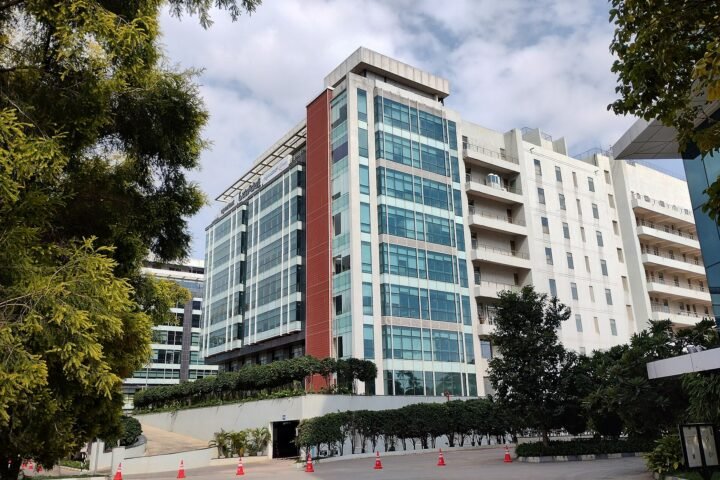
Featured image: The Pioneer Building in San Francisco, photographed in 2019. OpenAI lets candidates take final interviews in person in the city. · Photo: HaeB / Wikimedia Commons, CC BY-SA 4.0
Related stories


Sources
- OpenAI 4 Oct 2026Hiring philosophy, what OpenAI looks for, stages and timings, final interview format, AI-tool rules, preparation reading
- OpenAI 4 Oct 2026Values, operating principles, benefits, Residency and emerging-talent links
- OpenAI (Ashby job board) 4 Oct 2026828 open roles by location and department; 10 India roles; hybrid and relocation wording
- OpenAI 4 Oct 2026Early-career roles for 0-3 years of experience; internships and residencies
- OpenAI 4 Oct 2026Six-month Residency, 2026 applications closed, $18,333 monthly salary, San Francisco based, visa support
- TechCrunch 21 Aug 2025First India office in New Delhi; local team hiring
- OpenAI 3 Aug 2026India role can be based in Delhi, Mumbai or Bangalore; 3 days in office; relocation assistance
- OpenAI 8 Jun 2026Example US pay range in a posting
- OpenAI 4 Oct 2026Recommended reading in the interview guide