Fractal IPO demand: what 4x QIB bids and a flat debut signalled
Fractal's ₹2,834 crore IPO drew 4.18x QIB bids but just 1.03x retail and listed below ₹900. Subscription data, results since listing and lessons for AI IPOs.
 Ishaan Vardhan18 Oct 2026 · 8 min read
Fractal Analytics’ ₹2,834 crore IPO in February 2026 was subscribed 2.66 times. Big institutions bid for more than four times the shares set aside for them, while retail investors only just filled their quota. The stock then listed below its ₹900 issue price, climbed to a record high after strong annual results in May, and fell back after its July quarter. Here’s what the demand data actually showed, what has happened since, and what it says about how public markets are pricing Indian AI companies.
Key takeaways
- Fractal’s IPO ran from 9 to 11 February 2026 at ₹857–900 a share and was subscribed 2.66 times overall. Qualified institutional buyers bid 4.18 times their quota, against 1.03 times for retail investors.
- The issue was cut by 42%, from the ₹4,900 crore planned in the draft prospectus to ₹2,834 crore, with ₹1,023.5 crore of new shares and ₹1,810.4 crore sold by existing investors including Apax and TPG.
- Shares opened at ₹876 on the NSE on 16 February, 2.67% below the issue price, then hit an all-time high of ₹1,119.6 on the BSE in May after FY26 results.
- FY26 revenue was ₹3,300 crore (up 19%) and net income ₹287 crore (up 30%). In Q1 FY27 revenue grew 20%, but only 8.7% in constant currency.
- The stock fell about 5.9% after the Q1 results on 24 July 2026, according to Investing.com, as the decline in Fractal’s technology, media and telecom (TMT) business and the lack of guidance weighed on sentiment.
The IPO in numbers
Fractal, founded in Mumbai in 2000 by Srikanth Velamakanni, Pranay Agrawal and others, became India’s first AI unicorn in January 2022 after a $360 million investment from TPG, according to Wikipedia. It sells AI and analytics services, along with some products, to large global companies.
| Item | Detail |
|---|---|
| Issue dates | 9–11 February 2026 |
| Price band | ₹857–900 a share (final price ₹900) |
| Total size | ₹2,833.9 crore |
| Fresh issue | ₹1,023.5 crore |
| Offer for sale | ₹1,810.4 crore |
| Anchor book | ₹1,248 crore from 52 investors |
| Listing | 16 February 2026, NSE and BSE |
Sources: ICICI Direct (Capital Market), Entrackr, Entrepreneur India. For readers outside India: one crore is 10 million rupees, so the IPO raised ₹28.3 billion in total.
A smaller deal than planned
Fractal’s draft prospectus outlined a ₹4,900 crore IPO. The final red herring prospectus cut it by 42% to ₹2,834 crore, Entrackr reported, with existing investors choosing to sell fewer shares. In the offer for sale, Apax Partners’ vehicle Quinag Bidco sold ₹881 crore of shares (48.6% of the OFS), and TPG and the GLM Family Trust sold ₹450 crore each. Before the IPO, TPG’s vehicle was the largest shareholder at 25.49%, followed by Quinag Bidco at 18.64% and GLM Family Trust at 15.59%.
The fresh money (₹1,023.5 crore) goes to the company. According to ICICI Direct’s Capital Market report, the planned uses include ₹264.9 crore for its US subsidiary, ₹355.1 crore for R&D, ₹121.1 crore for new office space in India, ₹57.1 crore for equipment, and general corporate purposes.
Reading the demand signal
An Indian IPO splits shares into buckets for qualified institutional buyers (QIBs: mutual funds, insurers, foreign funds), non-institutional investors (wealthy individuals and companies), retail investors and employees. Final subscription by category, according to ICICI Direct:
| Category | Times subscribed |
|---|---|
| Qualified institutional buyers | 4.18x |
| Non-institutional investors | 1.06x |
| Retail individual investors | 1.03x |
| Overall | 2.66x |
Before the issue opened, Fractal raised ₹1,248 crore from 52 anchor investors at ₹900 a share, Entrepreneur India reported. Domestic mutual funds took about 38% of the anchor allocation. Other anchors included LIC, SBI Small Cap Fund, Morgan Stanley Investment Funds, Goldman Sachs Bank Europe, the Kuwait Investment Authority and Amundi.
So institutions wanted the stock, while individuals were lukewarm. The near-1x retail figure meant there was little pent-up demand from small investors to push the price up on listing day.
Listing day and after
Shares opened at ₹876 on the NSE on 16 February 2026, 2.67% below the issue price, and at ₹900 on the BSE, Upstox reported. A retail investor who got one 16-share lot for ₹14,400 saw it valued at ₹14,016 at the NSE open.
The picture improved with results. After Fractal reported FY26 numbers on 11 May 2026, the stock rose the next day as much as 5.77% to an all-time high of ₹1,119.6 on the BSE, about 24% above the issue price, according to Inc42. Inc42 put its market capitalisation at ₹18,472 crore (about $1.9 billion) that day.
The rally didn’t last. On 24 July 2026, the day after Q1 FY27 results, the stock fell about 5.9%, and Investing.com said it was trading about 26% below its 52-week high. We haven’t verified the share price as of 4 October 2026, so check a live quote before relying on any level here.
What the results since listing show
FY26: growth and better margins
Fractal’s FY26 press release (11 May 2026) reported:
- revenue of ₹3,300 crore, up 19%, compared with ₹2,765 crore in FY25 as disclosed in the IPO filings (Entrackr)
- net income of ₹287 crore, up 30%, with net margin at 8.7%
- Q4 revenue of ₹886 crore (up 17%) and Q4 net income of ₹116 crore (up 109%)
- healthcare and life sciences up 66% for the year and banking, financial services and insurance up 32%, while TMT fell 1%
- six clients worth more than $20 million a year (up from five) and 59 worth more than $1 million (up from 53)
Inc42 reported that management planned to raise R&D spending towards 10% of revenue, focusing on foundational models and agentic AI.
Q1 FY27: strong headline, softer underneath
The Q1 FY27 press release (23 July 2026) showed revenue of ₹912.5 crore, up 20%, and net income of ₹72.3 crore, up 92%. Adjusted EBITDA margin rose to 17%, and net revenue retention (how much more existing clients spend year on year) was 117%. Healthcare and life sciences grew 69% and BFSI 36%, while TMT fell 22%. CEO Srikanth Velamakanni said the business grew 35% excluding TMT.
The Q1 fact sheet shows the less flattering numbers:
| Q1 FY27 metric | Figure |
|---|---|
| Revenue growth, reported | 20.0% |
| Revenue growth, constant currency | 8.7% |
| Cash flow from operations | Negative ₹103 crore |
| Top 10 clients’ share of Fractal.ai revenue | 51.8% |
| Employees | 6,029 |
Constant-currency growth strips out exchange-rate moves. Because Fractal earns mostly in dollars and euros (67.4% of Fractal.ai revenue came from the Americas in Q1), a weaker rupee inflates reported rupee growth. The gap between 20% and 8.7% means more than half of the headline growth came from currency. Quarterly operating cash flow was also negative, as it was a year earlier.
What it means for AI companies planning to list
Fractal was the first Indian AI company to list, so its run is the closest thing to a benchmark for others considering an IPO. Four lessons stand out:
- Institutions will buy AI exposure at a price. QIBs bid more than four times their quota, but only after the selling shareholders cut the deal size by 42%.
- Retail investors need more than an “AI” label. Retail demand barely covered its quota, and the stock opened below its issue price on the NSE.
- Results move the stock more than the theme. A record high came with a 109% jump in Q4 profit, and a sharp fall followed a quarter with a weak segment and no formal guidance.
- Disclosure is detailed and immediate. Constant-currency growth, client concentration and operating cash flow are all in the quarterly fact sheet, so private AI companies preparing to list need audit-grade reporting well before filing.
Why it matters
For founders and employees in Indian AI, Fractal is now the reference point. Its IPO showed that public investors will fund an enterprise AI services company with real profits, but at a valuation its private-equity backers accepted only after shrinking their sale. Its first two quarters as a listed company show that investors look past headline growth to currency effects, segment weakness and cash flow.
If you work in data or AI, Fractal and its peers are still hiring. See our AI and ML jobs page. For more on AI companies raising money, private or public, follow our news and funding tracker.
This article is for information only and isn’t investment advice. Speak to a SEBI-registered adviser before buying or selling any security.
FAQ
How many times was the Fractal Analytics IPO subscribed?
2.66 times overall. QIBs subscribed 4.18 times, non-institutional investors 1.06 times and retail investors 1.03 times.
What was Fractal’s IPO price and listing price?
The issue price was ₹900. Shares opened at ₹876 on the NSE and ₹900 on the BSE on 16 February 2026.
How much did Fractal raise in its IPO?
₹2,833.9 crore in total: ₹1,023.5 crore in new shares for the company and ₹1,810.4 crore from existing shareholders selling, mainly Apax’s Quinag Bidco, TPG and the GLM Family Trust.
Has Fractal’s share price gone above its IPO price?
Yes. It reached an all-time high of ₹1,119.6 on the BSE in May 2026 after FY26 results, according to Inc42. It fell back after Q1 FY27 results in July.
What were Fractal’s FY26 results?
Revenue of ₹3,300 crore (up 19%) and net income of ₹287 crore (up 30%), according to the company.
Sources
- Entrackr, “Fractal reduces IPO size by 42% to Rs 2,834 Cr”, 3 February 2026. Link
- Entrepreneur India, “Fractal Analytics Raises INR 1,248 Cr from Anchor Investors Ahead of IPO”, 9 February 2026. Link
- ICICI Direct (Capital Market), “Fractal Analytics IPO ends with 2.66 times subscription”, 11 February 2026. Link
- Upstox, “Fractal Analytics share price: Stock lists at 2.7% discount on NSE; here’s how much investors lost”, 16 February 2026. Link
- Fractal Analytics, “Fractal Reports Profit Growth of 109% for Q4” (press release), 11 May 2026. Link
- Inc42, “Fractal Analytics Jumps 6% To Hit All-Time High After Q4 Profit Soars”, 12 May 2026. Link
- Fractal Analytics, “Fractal posts 20% revenue growth and 92% net income growth in Q1 FY27” (press release), 23 July 2026. Link
- Fractal Analytics, “Fact sheet Q1’27”, 23 July 2026. Link
- Investing.com, “Fractal Q1 FY27 slides: 92% profit surge amid AI pivot, shares fall”, 24 July 2026. Link
- Wikipedia, “Fractal Analytics”, accessed 4 October 2026. Link
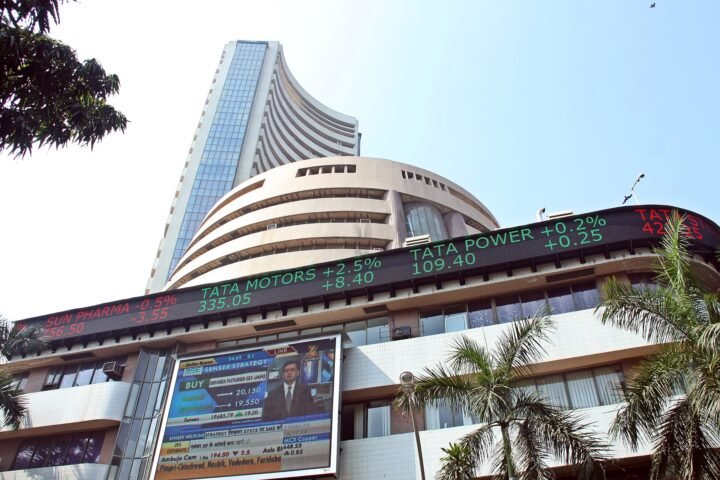
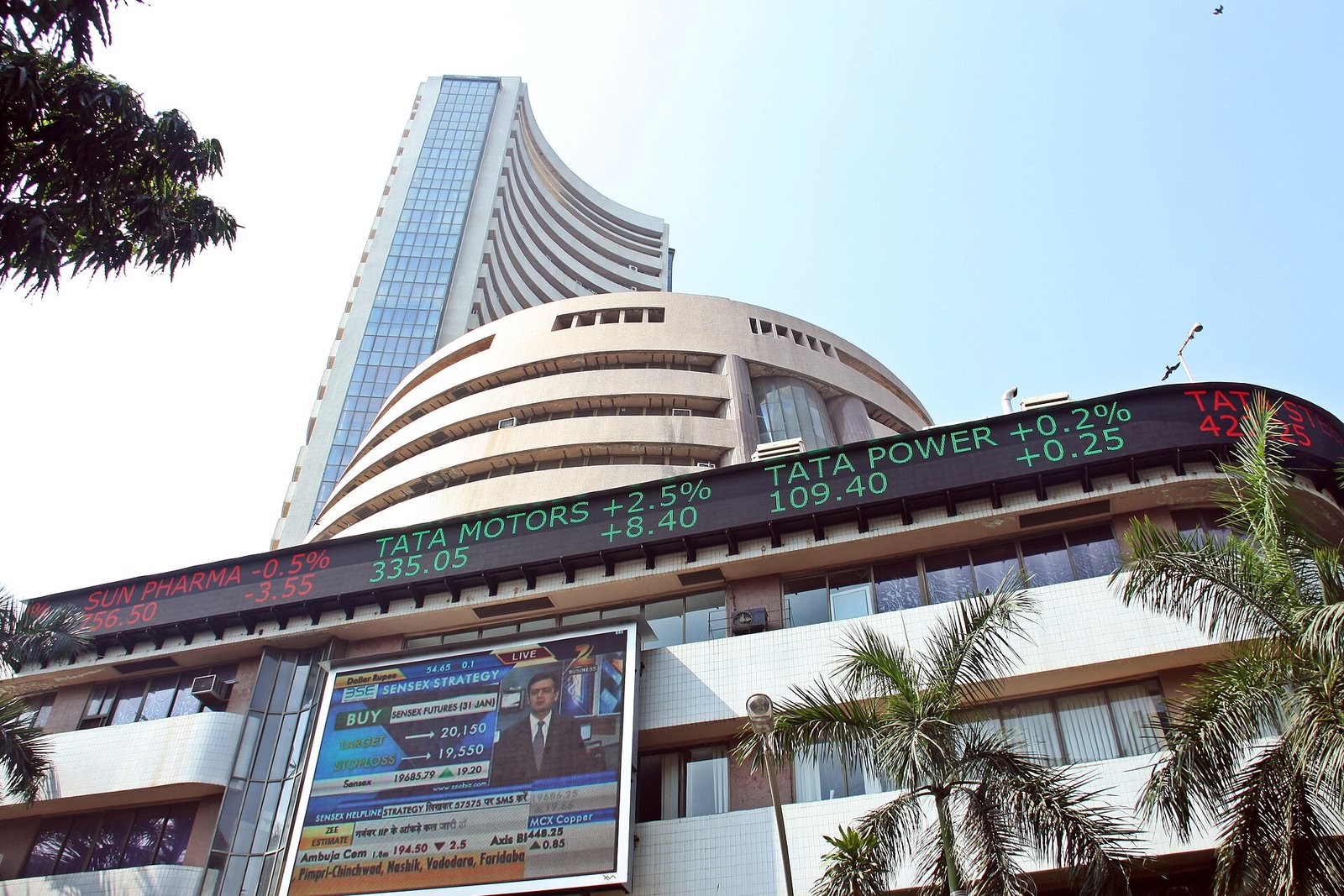
Featured image: The BSE building on Dalal Street, Mumbai. Fractal listed on the BSE and NSE on 16 February 2026. · Photo: BSEINDIA / Wikimedia Commons, CC BY-SA 3.0
How this article was made: researched and drafted with AI assistance by the 100xFounder editorial desk, using only the sources listed in it; every figure links to its source. Read our editorial policy, or report an error through our corrections policy.
Related stories



Sources (10)
- Entrackr 3 Feb 2026IPO cut from ₹4,900 crore to ₹2,834 crore, fresh/OFS split, selling shareholders and amounts, pre-IPO shareholding, FY25 revenue and profit
- Entrepreneur India 9 Feb 2026₹1,248 crore anchor book, 52 anchors, 38% to domestic MFs, named anchors
- ICICI Direct (Capital Market) 11 Feb 20262.66x subscription, category-wise subscription, issue size, price band, use of proceeds
- Upstox 16 Feb 2026Listing at ₹876 NSE (-2.67%) and ₹900 BSE; lot value
- Fractal Analytics 11 May 2026Q4 and FY26 revenue, net income, segment growth, client counts
- Inc42 12 May 2026All-time high ₹1,119.6 on BSE, market cap ₹18,472 crore, R&D to 10% plan
- Fractal Analytics 23 Jul 2026Q1 FY27 revenue, net income, NRR, segment growth, CEO quote ex-TMT 35%
- Fractal Analytics 23 Jul 2026Constant currency growth 8.7%, operating cash flow, client concentration, geography mix, employees
- Investing.com 24 Jul 2026Shares fell ~5.9% after Q1 results, ~26% below 52-week high, reasons
- Wikipedia 4 Oct 2026Founded 2000 in Mumbai, founders, unicorn Jan 2022 with $360M from TPG, first Indian AI company to list